Startup Originals Team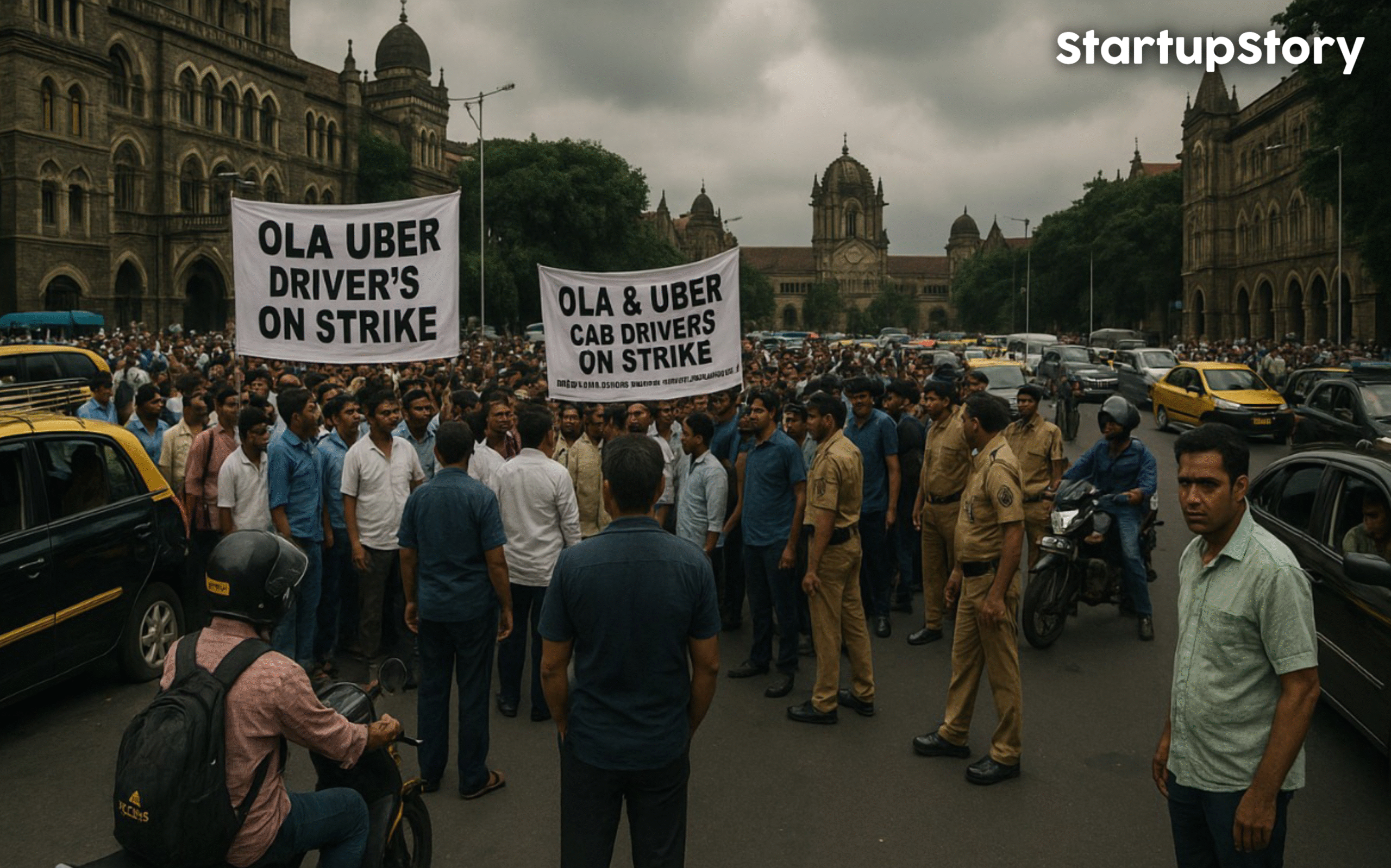
In mid‑July 2025, Mumbai experienced widespread disruption following a two‑day strike by Ola and Uber drivers protesting against low earnings and high commissions. The action brought the city’s ride‑hailing services to a standstill, with ramifications for commuters, gig‑economy drivers, and the wider regulatory landscape.
Protest Ignites Over Fare Policies and Gig Worker Rights:
Starting July 15, hundreds of cab drivers gathered at Azad Maidan near CSMT, staging a strike demanding:
- A fixed per‑kilometre fare comparable to traditional meter taxis (currently around ₹32/km for AC taxis)
- Significantly reduced commission rates from aggregators, which drivers say can leave them with as little as ₹5–10 per km
- A cap on permits for cabs, autos, and bike taxis to curb overcrowding and preserve earnings
- Enforcement of the Maharashtra Gig Workers’ Act and formation of a welfare board for drivers
Commuters Left Stranded and Harassed:
As the strike persisted into its second day, commuters faced severe inconvenience:
- Several passengers were reportedly forced to disembark mid‑ride amid aggressive picketing
- Public advisories urged travellers especially at Mumbai Airport to anticipate major disruptions
- Alternative transport like Rapido and traditional ‘kali‑peeli’ cabs saw heightened demand
Drivers Allege Exploitation by Aggregators:
Many drivers describe their income as unsustainable:
“If a passenger pays Rs 500, a large portion is deducted by the platforms”- a common complaint calling out unfair commission structures
One driver, Mohit from Navi Mumbai, explained:
“Currently…some days we get ₹5 per km, ₹10 per km…We want a fixed rate per kilometre.”
They argue that such rates barely cover fuel, EMI on vehicles, maintenance, and everyday expenses.
Aggressive Tactics Spark Concern:
Reports emerged that drivers supporting the strike were targeting non‑participating cab drivers:
- Incidents of making drivers stop service mid‑trip and threatening physical damage were recorded
- Commuters recounted passengers being asked to de‑board at various check‑points across the city
Authorities Respond and Talks Begin:
Transport Minister Pratap Sarnaik met with driver unions and aggregator representatives:
- He promised a policy review within 15 days to address fare structures
- A meeting with senior Ola/Uber leaders from Bengaluru was scheduled to negotiate terms
However, drivers remain cautious, citing past delays in implementing systemic change.
What’s Next: Resolution or Escalation?
Key areas to watch include:
- Fare regulation – Will the government introduce fixed rates or allow dynamic pricing under revised aggregator guidelines?
- Commission reform – Will Uber and Ola lower their cut to help drivers earn a living wage?
- Regulation of permits – Could a permit cap ease oversupply and stabilise incomes?
- Legal and welfare protections – Will the Maharashtra Gig Workers’ Act and driver welfare boards be actively launched?
Stakeholders including commuters, platform operators, unions, and policymakers now await the outcome of policy discussions, which could profoundly reshape ride‑hailing norms in India’s commercial capital.