Startup Originals Team
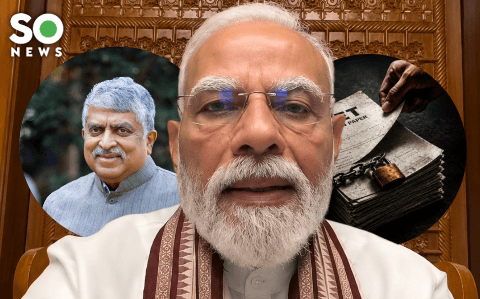
Meta has introduced additional safeguards for content published by Prime Minister Narendra Modi and other high-profile public figures after facing scrutiny from the Ministry of Electronics and Information Technology (MeitY). The move follows a recent incident in which one of the Prime Minister’s Facebook posts was temporarily restricted, prompting the government to seek an explanation from the social media company.
In a written response submitted to MeitY, Meta said it is strengthening its internal moderation process for accounts belonging to prominent personalities. The company has assured the government that future moderation decisions involving such accounts will be reviewed through multiple levels of oversight before any action is taken.
What Happened?
The latest development comes a day after MeitY summoned Meta’s Global Public Policy head to explain why a Facebook post by Prime Minister Narendra Modi was temporarily restricted. The Centre reportedly rejected Meta’s initial explanation and expressed concerns over the company’s content moderation process.
According to reports, Meta has now committed to implementing additional review mechanisms for posts published by the Prime Minister and other high-profile accounts. Before any moderation action is taken, the content will be examined by multiple senior officials within the company to reduce the possibility of erroneous decisions.
The government has reportedly increased its scrutiny of Meta’s moderation systems, particularly when they involve constitutional authorities and prominent public figures.
Key Details
Under the revised process, content from designated high-profile accounts will undergo enhanced internal checks before restrictions, removals, or other enforcement actions are applied. Senior members of Meta’s policy and content review teams will participate in these decisions to ensure greater accuracy.
The changes are designed to minimize moderation mistakes while maintaining compliance with Meta’s community standards. The company has informed the government that the additional oversight is intended to improve consistency and reduce the likelihood of similar incidents occurring in the future.
The issue has once again highlighted the challenges technology companies face in balancing automated content moderation systems with the need for human review, particularly when dealing with influential public figures whose posts attract significant public attention.
Why This Matters
The incident is significant because it reflects the growing regulatory focus on how global technology companies moderate content in India. As one of Meta’s largest markets, India has repeatedly emphasized the need for greater accountability and transparency from digital platforms.
Any moderation action involving senior government officials or major public figures can quickly become a matter of public debate and regulatory concern. Meta’s decision to introduce additional safeguards indicates its effort to maintain trust with Indian authorities while continuing to enforce its platform policies.
The development also underscores the increasing importance of balancing platform safety with the public interest, especially when content originates from elected leaders and government institutions.
Company Background
Meta Platforms Inc., headquartered in Menlo Park, California, is one of the world’s largest technology companies. Founded by Mark Zuckerberg and his co-founders in 2004, the company operates Facebook, Instagram, WhatsApp, Messenger, and Threads, serving billions of users worldwide.
India represents one of Meta’s most important markets, with hundreds of millions of users across its social media platforms. The company has invested heavily in digital services, artificial intelligence, creator tools, and business messaging while working closely with governments on regulatory compliance and online safety.
Industry Impact
Meta’s decision could influence how other global social media platforms handle content moderation for government leaders and high-profile public figures. Companies operating in India may adopt more rigorous review procedures to avoid similar controversies and strengthen regulatory compliance.
The move also signals that governments are likely to continue demanding greater transparency in automated moderation systems. As digital platforms increasingly rely on artificial intelligence to manage vast amounts of content, the role of human oversight in sensitive cases is expected to become even more important.
For users, the changes may improve confidence that moderation decisions affecting influential accounts undergo more careful evaluation before enforcement actions are implemented.
Future Plans
Meta has indicated that the strengthened review process is part of broader efforts to improve the accuracy of its content moderation system. While the company has not announced further policy changes, it is expected to continue engaging with Indian authorities on compliance and platform governance.
The company is also investing in advanced artificial intelligence tools alongside expanded human review processes to improve content moderation across its global platforms. Additional refinements to these systems are likely as regulatory expectations continue to evolve in India and other major markets.
Conclusion
Meta’s decision to introduce stricter oversight for Prime Minister Narendra Modi and other prominent accounts marks an important step in addressing concerns over content moderation accuracy. By adding multiple levels of senior review before taking action against high-profile accounts, the company aims to reduce moderation errors while strengthening its relationship with Indian regulators. The development also highlights the growing importance of transparent and accountable content moderation practices as governments worldwide increase oversight of major digital platforms.