Startup Originals Team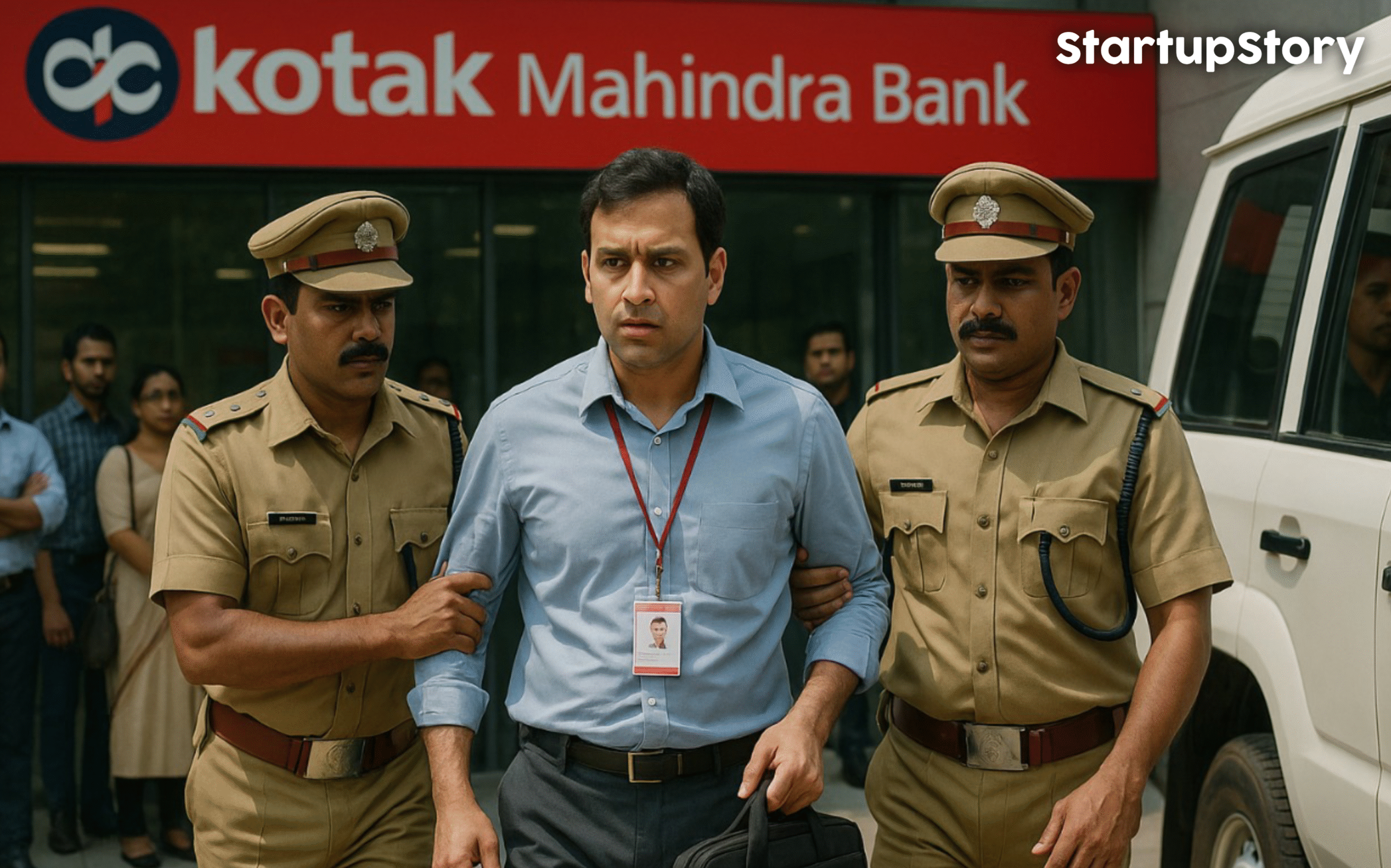
In a startling revelation, the Economic Offences Unit (EOU), Bihar Police, filed fresh charges on June 27, 2025, against Sumit Kumar, a former branch manager at Kotak Mahindra Bank, alongside associate Shashikant Kumar and others. They are accused of siphoning off ₹31.93 crore from the District Land Acquisition Officer’s (DLAO) account. This was done by forging official cheques and signatures to authorize unauthorized withdrawals over two years, from between 2019 and 2021.
How the Scam Worked: Forged Cheques & Signature Cloning:
According to the EOU’s DIG Manavjit Singh Dhillon, Sumit leveraged his branch authority to approve cheque encashments himself, bypassing the need for the DLAO’s signature. Dubbed “cheque‑cloning fraud,” this manipulation allowed him to execute high‑value withdrawals undetected for years.
Misuse of Customer KYC Data & Money Laundering:
To launder the funds and avoid detection, Sumit opened 21 bank accounts without customer consent-using their Aadhaar and KYC documents-to funnel money into foreign gambling apps based in South Africa (Betway) and the Philippines (12 Bet). He also enlisted “money‑mules” who transferred and laundered funds through UPI or bank accounts, effectively masking the illicit trail.
Investigation & Legal Fallout:
- 2021: The scam was exposed when a subordinate, Shubham Kumar Gupta, attempted an unauthorized RTGS transfer using a forged DLAO signature. Police acted swiftly, caught the fraud in action, and Sumit was arrested. Kotak promptly terminated his employment.
- 2025: Authorities escalated the matter. The EOU filed fresh cases under Anti‑Money Laundering laws, coordinating with the Enforcement Directorate (ED), which initiated formal ECIR proceedings. The ED has provisionally attached assets valued at ₹1.66 crore, including property and jewelry.
Sumit, currently out on bail, faces serious charges under sections of the IPC, PMLA, and local laws. Notices have been issued to Shashikant and other suspects for interrogation.
Systemic Weaknesses Revealed:
The incident highlights critical failures on multiple fronts:
- Internal control lapses: A senior branch manager was able to approve and forge government cheques without oversight.
- KYC verification gaps: Blanketed misuse of Aadhaar documents allowed unauthorised account openings under unsuspecting customers’ names.
- Cross-border laundering loopholes: Funds were routed through foreign gambling platforms, escaping domestic AML tracking systems.
Takeaways & Need for Reform:
This case underscores the urgent requirement for:
- Stricter oversight of high‑value cheque approvals.
- End‑to‑end KYC authentication and periodic verifications.
- Real‑time AML alerts based on UPI/RTGS anomalies.
- Cross-border transaction monitoring, especially related to gambling and crypto platforms.