Startup Originals Team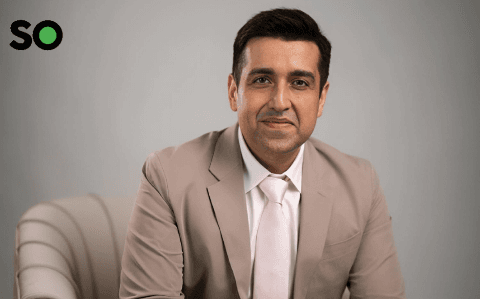
Building a successful smartphone brand in one of the world’s most competitive markets is never easy. Yet one entrepreneur decided to walk away from a leadership role at a major smartphone company to pursue a much bigger vision – creating AI-powered smartphones designed specifically for Indian consumers.
His journey is a story of taking risks, challenging industry norms, and betting on the future of artificial intelligence.
Leaving the Comfort of a Successful Career
After spending years helping build and scale smartphone brands in India, the founder gained deep insights into how consumers use technology in their daily lives.
During his time in the industry, he noticed that most smartphones were designed for global markets, with only limited customization for Indian users.
While smartphone hardware continued improving, he believed the next major innovation would come from:
- Artificial Intelligence
- Personalized user experiences
- Local language support
- Smarter software ecosystems
This belief eventually pushed him to leave his role at Realme and start building something of his own.
The Vision: AI-First Smartphones for India
Rather than competing solely on camera quality or processor speed, the new venture focuses on integrating AI deeply into the smartphone experience.
The goal is to create devices that can:
- Understand user behavior
- Offer personalized recommendations
- Improve productivity
- Support regional languages
- Deliver smarter everyday experiences
The founder believes future smartphones will act less like devices and more like intelligent digital assistants that understand users and adapt to their needs.
Why India Became the Focus
India is one of the world’s largest smartphone markets, with millions of new users coming online every year.
However, many technology products are still built primarily for Western markets and later adapted for India.
The founder saw an opportunity to build products specifically for Indian consumers by focusing on:
- Local language capabilities
- AI-powered communication tools
- Region-specific features
- Affordable innovation
His vision is to create smartphones that feel truly Indian rather than simply being global devices sold in India.
Building in the Era of Artificial Intelligence
The rise of generative AI has transformed the technology landscape.
Consumers are increasingly expecting devices that can:
- Summarize information
- Generate content
- Translate languages
- Automate tasks
- Provide intelligent assistance
Recognizing this shift early, the startup positioned itself around AI-native experiences rather than traditional smartphone specifications alone.
This approach aims to differentiate the company in a market crowded with established global brands.
Challenges Along the Way
Entering the smartphone industry as a new player comes with significant challenges.
The company must compete against:
- Global smartphone giants
- Established Chinese brands
- Strong distribution networks
- Aggressive pricing competition
Building hardware requires substantial investment, supply chain expertise, and brand trust.
However, the founder believes AI could create a new category of smartphones that allows smaller innovators to compete on experience rather than scale alone.
The Bigger Picture
The startup reflects a broader trend where technology companies are moving from hardware-focused innovation to AI-driven experiences.
As artificial intelligence becomes a core part of consumer technology, companies that successfully combine:
- Hardware
- Software
- AI intelligence
- Localized experiences
may define the next generation of smartphones.
India, with its massive user base and growing digital ecosystem, could become a key testing ground for these innovations.
Conclusion
Leaving a successful career at Realme was a bold decision, but the founder’s vision extends beyond selling smartphones. His goal is to build AI-powered devices designed around the needs of Indian consumers and the future of intelligent computing.
As AI reshapes the technology industry, his journey highlights how entrepreneurs are betting on a future where smartphones become smarter, more personal, and more deeply connected to everyday life.