Startup Originals Team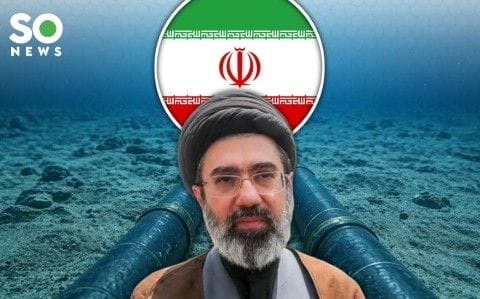
Iran’s Islamic Revolutionary Guard Corps (IRGC) has issued a warning highlighting the vulnerability of undersea internet cables in the Persian Gulf, particularly around the Strait of Hormuz. These submarine cables are a crucial part of global digital infrastructure, carrying a large share of international data traffic between Asia, Europe, and the Middle East.
The statement has raised concerns because any major disruption in this region could impact internet connectivity, business operations, and communication systems across multiple countries.
Why Undersea Cables Matter
Most of the world’s internet traffic does not travel through satellites but through undersea fibre-optic cables laid across oceans and seas. These cables connect countries, data centres, and financial systems, making them essential to the modern global economy.
The cables passing through the Gulf region are especially important because they help route traffic between:
- Asia and Europe
- Middle East and global markets
- Major financial and business hubs
If these routes are disrupted, the impact can be felt far beyond the immediate region.
Strait of Hormuz: More Than an Oil Chokepoint
The Strait of Hormuz is widely known as one of the world’s most important oil transit routes, but it is also a major digital corridor. Several submarine cable systems pass through or near this narrow waterway.
Because so many critical connections are concentrated in one area, the region is vulnerable to both accidental damage and deliberate attacks. Experts often consider such chokepoints as high-risk zones for global infrastructure.
A simultaneous disruption of multiple cables could cause serious internet slowdowns or outages across the Gulf and connected regions.
Potential Impact on India and Other Countries
Countries like India rely heavily on these international cable routes for data exchange, cloud services, and business connectivity. Any disruption could affect several sectors that depend on stable internet infrastructure.
Possible effects may include:
- Slower internet speeds and network congestion
- Temporary outages in some services
- Delays in financial transactions and global trading systems
- Disruptions to IT, outsourcing, and communication industries
Given India’s large digital economy, even short disruptions could have wide economic implications.
Geopolitics Meets Digital Infrastructure
The warning shows how geopolitical tensions are no longer limited to oil supply or military activity. Critical digital infrastructure has now become part of strategic risk discussions.
As nations become more connected through data networks, undersea cables are increasingly viewed as assets that need stronger protection and backup systems.
Governments and telecom operators worldwide are already exploring:
- Alternate cable routes
- Redundant network systems
- Improved cable monitoring and security
The Bigger Picture
This development highlights how dependent the world is on invisible infrastructure beneath the sea. While these cables are rarely discussed publicly, they carry the backbone of the internet and global commerce.
Any threat to them can quickly become a threat to economies, communication, and national security.
Conclusion
Iran’s warning about undersea internet cables in the Gulf has drawn attention to one of the most sensitive parts of global digital infrastructure. Whether symbolic or serious, it underscores a growing reality: in today’s world, geopolitical tensions can affect not only energy markets but also the internet itself.