Startup Originals Team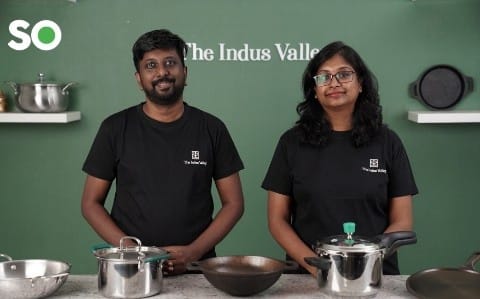
D2C kitchenware brand The Indus Valley has reported a 61% jump in revenue to ₹117 crore in FY25, up from ₹72.5 crore in FY24. At the same time, losses narrowed by 61% to just ₹2.5 crore, signalling that the Chennai-based startup is closing in on profitability while scaling aggressively.
Founded in 2016 by husband-and-wife duo Jagadeesh Kumar and Madhumitha Uday Kumar, The Indus Valley has grown from a personal kitchen mishap into India’s number one healthy cookware brand, with a mission to transform 100 million Indian kitchens.
If you follow India’s fastest-growing D2C brands and the founders behind them, this is a story worth knowing.
The Origin Story: A Plastic Container That Melted in the Oven
The idea was born from a real kitchen accident. While preparing a meal in 2015, a plastic container melted inside their oven. The incident shocked the couple and made them realize that cookware matters just as much as ingredients when it comes to healthy food.
They started looking for safer, toxin-free alternatives. What they found was alarming. Most cookware in the market either contained harmful chemical coatings or was made from materials that could leach toxins into food during cooking. The healthier options that did exist were either unreliable or not easily accessible.
That gap became the opportunity. In March 2016, they launched The Indus Valley with a clear mission: provide cookware made only from natural, health-focused materials with zero chemical coatings.
Jagadeesh Kumar is an engineering graduate with a PGDM from IIM Raipur and has previously worked at TCS, Linde India, and Healthkart. Madhumitha brings an entrepreneurial drive and serves as the face of the brand alongside Jagadeesh.
FY25 Financial Breakdown
Revenue from core kitchenware operations reached ₹114.5 crore in FY25, compared to ₹72 crore in FY24. Additional income of ₹2.5 crore brought total revenue to ₹117 crore.
The company’s revenue has grown rapidly over the past three years, from ₹38 crore in FY23 to ₹72.5 crore in FY24 to ₹117 crore in FY25, nearly tripling in just two years.
Total expenses rose 51% to ₹119 crore, driven by a 60% increase in cost of goods sold to ₹49 crore, employee benefit expenses of ₹11 crore (up from ₹7 crore), and advertising and selling expenses of ₹51.3 crore (up 45% from ₹35.5 crore).
Despite the higher spend, the company’s unit economics improved meaningfully. It spent ₹1.04 to earn every rupee in FY25, down from ₹1.10 in FY24. Net loss narrowed sharply to ₹2.5 crore from ₹6.5 crore the previous year.
At this trajectory, profitability looks within reach in the coming fiscal year.
What The Indus Valley Sells
The Indus Valley positions itself as India’s first healthy cookware brand. Every product is 100% toxin-free with no chemical coatings.
The product portfolio is built around natural materials including cast iron, sheet iron, tri-ply stainless steel, neem wood, clay, copper, brass, and bronze. The brass, bronze, and copper items are primarily used for serving and drinking purposes.
The company currently offers over 230 SKUs and is working towards expanding to 1,000 SKUs. Products go through extensive testing including material safety, food quality, and taste quality checks before reaching customers.
The brand sells through its own D2C website, major online marketplaces like Amazon and Flipkart, quick commerce platforms, and an expanding network of offline retail outlets. Celebrity campaigns have featured Shriya Saran and Mandira Bedi.
Funding and Valuation
In December 2024, The Indus Valley raised ₹23 crore in a pre-Series A round led by DSG Ventures. This was the company’s first funding in 25 months and valued the company at ₹303 crore (approximately $36 million) post-money.
Earlier, in October 2022, it raised ₹15.33 crore in a Seed 2 round led by DSG Consumer Partners and Rukam Capital. The initial funding round also included The Chennai Angels.
Since DSG’s first investment in 2021, the company has achieved over 4x growth while maintaining capital efficiency of nearly 5x, an impressive ratio for a D2C brand scaling this fast.
The Market Opportunity
India’s consumer kitchenware market was valued at approximately ₹29,000 crore ($4.2 billion) in FY22, with cookware alone making up 22% of the segment, roughly ₹6,250 crore. The market is expected to grow at a CAGR of 10.2% between FY22 and FY27.
Despite the size, the market remains highly fragmented. Organised players account for just 40%, leaving a massive opportunity for branded, quality-focused companies like The Indus Valley to capture share.
The shift towards health-conscious cooking, awareness around chemical-coated non-stick cookware risks, and the growth of D2C channels are all tailwinds for the brand.
What Should Startups and Founders Take Away?
The Indus Valley’s journey carries valuable lessons for the D2C ecosystem:
The best startup ideas often come from personal pain points. A melted plastic container in an oven became a ₹117 crore brand. The founders did not need market research to spot the opportunity. They lived it.
Capital efficiency matters more than vanity metrics. The company has raised relatively modest amounts and still achieved 4x growth with 5x capital efficiency. That is the kind of profile investors love.
Narrowing losses while growing 61% is the sweet spot. Many D2C brands grow revenue fast but bleed cash. The Indus Valley is doing both: scaling and getting leaner at the same time.
Health and safety positioning is a durable moat. In a commoditised cookware market, “toxin-free” is not just marketing. It is a genuine product differentiator that builds trust and repeat purchases.
India’s D2C story keeps getting stronger, and startuporiginals.in will keep tracking what this means for founders and investors.
The Bottom Line
From a kitchen accident to ₹117 crore in revenue, Jagadeesh and Madhumitha have built something rare: a D2C brand that is growing fast, narrowing losses, and solving a real health problem that affects every Indian household.
With a mission to transform 100 million kitchens and a product portfolio that puts health before convenience, The Indus Valley is proving that you can build a serious business by simply caring about what goes into people’s food.
Stay updated with India’s startup and founder stories. Explore more on Startup Originals: https://startuporiginals.in/