Startup Originals Team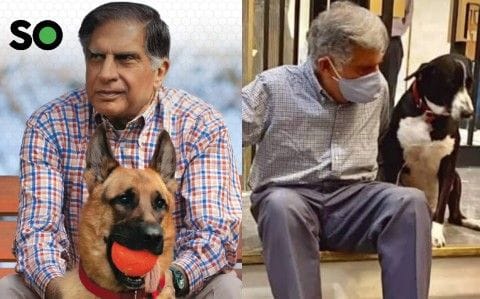
Ratan Tata’s ₹165 Crore Animal Hospital and the Legacy of Compassion He Left Behind
Visionary. Philanthropist. Dog lover. Ratan Tata passed away on October 9, 2024, at the age of 86 in Mumbai. But his legacy goes far beyond boardrooms and business empires. Among the most personal chapters of his life was his deep, unwavering compassion for animals, a commitment that he turned into real infrastructure, real policy, and real impact.
If you follow stories of leaders who built more than just businesses, Ratan Tata’s contribution to animal welfare is one of the most meaningful you will ever come across.
The Small Animal Hospital, Mumbai
Just months before his passing, on July 1, 2024, Ratan Tata inaugurated the Tata Trusts Small Animal Hospital in Mahalaxmi, Mumbai. It was one of his last and most personally meaningful contributions.
The hospital is a not-for-profit facility built with an investment of ₹165 crore. It spans 98,000 square feet across five floors on a 2.2-acre campus, with a capacity of over 200 beds. It is one of the very few 24/7 animal hospitals in India, providing round-the-clock emergency care for dogs, cats, rabbits, and other small pets.
The facility includes ICUs and HDUs with life support for critically ill animals, advanced diagnostic imaging including CT scans, MRIs, X-rays, and ultrasound, specialty treatments in dermatology, dental care, and ophthalmology, an in-house pathology lab covering haematology, microbiology, cytology, and biochemistry, separate waiting areas for dogs and cats, four fully equipped operation theatres, and inpatient wards designed for comprehensive care.
The hospital is led by Thomas Heathcote, a British veterinarian who relocated to Mumbai specifically for this project. It has partnerships with five UK veterinary schools, including the Royal Veterinary College London, for training, diagnostics, and surgical services.
A dedicated annexe is also being built for the sterilisation and treatment of stray dogs, run by the NGO Welfare of Stray Dogs. Phase 2 of the hospital will introduce orthopaedic surgery, laparoscopy, physiotherapy, and advanced oncology.
The Personal Story Behind the Hospital
This hospital was not born from a corporate strategy meeting. It came from a deeply personal experience.
Years ago, when one of Ratan Tata’s dogs needed a joint replacement, he could not find a single facility in India capable of performing the procedure. He ended up flying his dog to the University of Minnesota in the United States. But by the time they arrived, it was too late for a full replacement. The veterinarian could only freeze the dog’s joint in a particular position.
That experience stayed with him. He resolved that Mumbai, and India, needed a world-class veterinary hospital where no pet owner would ever face the same helplessness.
He could only begin working on the project after stepping down as Chairman of Tata Sons in 2012. The hospital was originally planned for Kalamboli, but Tata moved it to the more central Mahalaxmi location because he was concerned about the commute pet owners in Mumbai would face, especially during emergencies. Finding the right land and getting permissions caused further delays. But more than a decade later, in 2024, his dream finally became a reality.
The Buckingham Palace Story
In 2018, Ratan Tata was invited to Buckingham Palace to receive a lifetime achievement award from the then-Prince of Wales, now King Charles III. It was one of the most prestigious honours any individual can receive.
But Tata cancelled the trip at the last moment.
The reason was simple. His dog, Tango, had fallen seriously ill. Tata told his close friend Suhel Seth that he could not leave his pet in that condition.
When King Charles learned the reason, he reportedly remarked that it spoke volumes about who Ratan Tata truly was as a person. The story went viral and earned Tata deep respect across the world, not for attending a ceremony, but for choosing compassion over prestige.
Strays Were Welcome at Bombay House and Taj Hotels
Ratan Tata’s compassion was never limited to his own pets.
At Bombay House, the headquarters of the Tata Group, stray dogs from the surrounding area are welcomed and cared for. The building has a dedicated kennel exclusively for strays.
At the Taj Hotels, Tata ensured that stray animals were allowed inside the premises and treated with kindness. In 2024, photos of a stray dog sleeping peacefully under a tree at the Taj Mahal Hotel in Mumbai went viral. An employee shared the images, expressing happiness that strays receive the same hospitality as guests. It was a reflection of the culture Tata built.
He also supported Shantanu Naidu, a young Tata employee who started an initiative to protect stray dogs from speeding vehicles. Tata became a mentor and backer of the project, and the two developed an unlikely but well-known friendship rooted in their shared love for animals.
What Should Startups and Founders Take Away?
Ratan Tata’s animal welfare work carries lessons that go beyond philanthropy:
Purpose-driven projects create lasting legacy. The Small Animal Hospital will serve Mumbai’s pets and strays for decades, long after any quarterly earnings report is forgotten.
India’s pet care market is booming. With over 30 million pet-owning households and growing, the country needs more world-class veterinary infrastructure. Startups in pet health, pet tech, and animal welfare have a massive opportunity.
Leadership is about values, not just valuations. Tata’s decision to skip Buckingham Palace for his sick dog says more about his character than any business deal ever could.
Stray animal welfare is a real and growing sector. NGOs, municipal bodies, and private organisations are all investing more. Startups solving for stray management, sterilisation, and adoption platforms are well positioned.
India’s intersection of business and compassion is producing powerful stories, and startuporiginals.in will keep tracking what this means for the ecosystem.
The Bottom Line
Ratan Tata once said, “A pet is no different from a member of one’s family today.” He didn’t just say it. He invested ₹165 crore, built a five-floor hospital, relocated a British veterinarian to Mumbai, and opened the doors for strays at every building he had influence over.
In a world where business success is often measured in revenue and market cap, Ratan Tata reminded us that how we treat the most vulnerable, including animals, is the truest measure of who we are.
His hospital stands. His values endure. And his legacy of compassion will outlast everything else.
Stay updated with India’s startup and founder stories. Explore more on Startup Originals: https://startuporiginals.in/