Startup Originals Team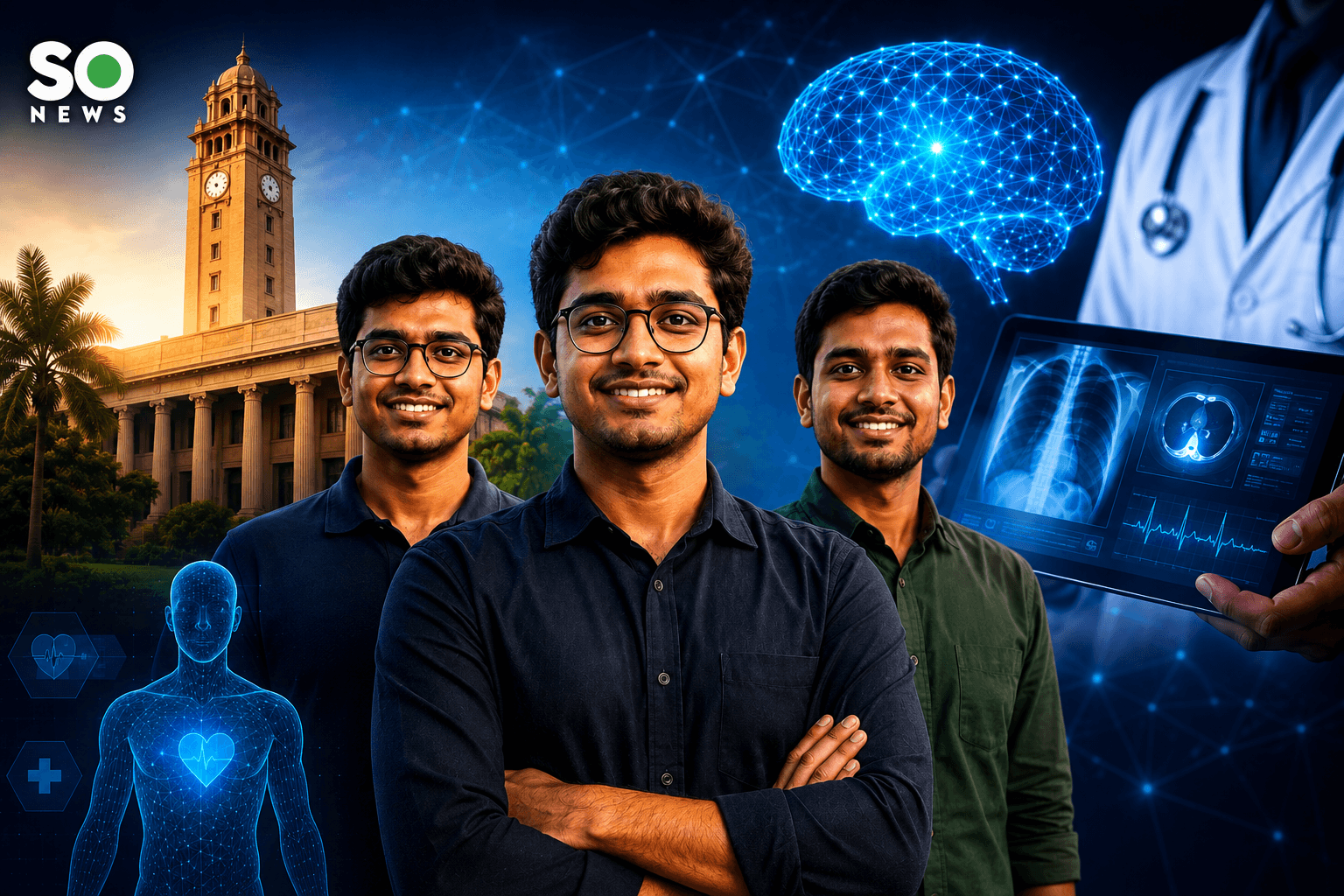
Healthcare generates enormous amounts of information every day, but doctors still spend significant time documenting consultations, preparing clinical notes and maintaining patient records. Plenome Technologies is building technology aimed at reducing this administrative burden while improving how healthcare data is created and managed.
The IIT Madras-incubated deep-tech startup has developed Ashwin AI, a healthcare-focused artificial intelligence platform that converts doctor-patient conversations into structured clinical documentation. In 2026, the product gained national attention through the BHASHINI ecosystem and its deployment at AIIMS New Delhi.
Plenome’s journey is notable because it combines AI, blockchain and healthcare infrastructure rather than focusing on a single consumer-facing application. The company has moved from an academic research environment to funding, product development and institutional healthcare applications.
The Beginning of Plenome
Plenome emerged from research at IIT Madras, particularly work associated with automation, data engineering and distributed technologies.
The company was founded by Prof. Prabhu Rajagopal, along with Vijayaraja Rathinasamy and Anirudh Varna. Rajagopal is an IIT Madras faculty member and Shanti Swarup Bhatnagar Award recipient, while the co-founders bring expertise in embedded systems, entrepreneurship, blockchain and AI.
Plenome was incorporated in 2023 and is based at the IIT Madras Research Park in Chennai. It is incubated at IIT Madras and recognised by MeitY.
The founders focused on a difficult problem: how sensitive information can be collected, stored and shared securely while remaining useful across different organisations and systems.
That thinking led Plenome toward healthcare, e-governance and other areas where data security and interoperability are particularly important.
How Plenome Built Its Deep-Tech Business
Plenome’s technology strategy combines artificial intelligence with blockchain and distributed-ledger technology.
The company develops digital platforms intended for sensitive applications where data privacy, security and interoperability matter. Its portfolio includes Ashwin AI, BlockTrack, OrganEase, BlockVote and the Aayush personal health-record platform.
Its OrganEase platform focuses on organ-donation data, while BlockVote is designed for digital elections. This broader product portfolio shows that Plenome’s original vision was not limited to healthcare documentation.
Instead, the company has been developing technology for systems where trust, secure data management and reliable digital records are important.
Ashwin AI Became Plenome’s Breakthrough Product
The biggest part of Plenome’s recent growth story has been Ashwin AI.
Ashwin AI works as an AI-powered clinical documentation assistant. During a consultation, the software can listen to the conversation between a doctor and patient and convert the information into structured clinical notes.
The platform can generate consultation summaries, prescription records and medical reports. It can also identify clinical information and map it to ICD-10 codes. Plenome says the system is designed to integrate with existing electronic medical record systems through ABDM-ready APIs.
The idea is straightforward:
Doctor and patient speak → Ashwin AI captures the conversation → AI structures the medical information → clinical notes and reports are generated.
This approach is designed to reduce manual documentation and allow doctors to spend more attention on patient interactions.
Solving India’s Multilingual Healthcare Challenge
India’s healthcare market has another major challenge: language diversity.
Patients and doctors do not always communicate in English, and healthcare technology designed around a limited set of languages can struggle to work equally well across the country.
Ashwin AI is designed with multilingual capabilities and can understand native accents and dialects. Plenome has also positioned the platform within India’s broader BHASHINI language-technology ecosystem.
This became an important part of the startup’s story in 2026 as Plenome showcased its voice-first healthcare technology through the BHASHINI platform and the India AI Impact Summit.
The AI Hackathon and AIIMS Milestone
A major turning point came when Ashwin AI won recognition through the BHASHINI nationwide AI hackathon.
Following the achievement, the technology was deployed at AIIMS New Delhi, according to reports published in August 2026. The deployment focused on using AI to support clinical documentation and prescription-related workflows.
For an early-stage deep-tech company, reaching a major public healthcare institution represents an important validation point.
Healthcare AI products must work within environments where accuracy, privacy, integration and reliability are critical. Moving from an incubated startup environment toward institutional deployment therefore represents a significant stage in Plenome’s journey.
The Funding That Helped Plenome Scale
In July 2025, Plenome raised ₹6.5 crore in seed funding.
The round was led by Ovington Capital Partners, a Luxembourg-based investment firm, with participation from AADI, a UAE-based company, and angel investor Manish Gandhi.
The funding was intended to help Plenome scale existing pilots, accelerate product development and pursue international opportunities.
At the time, the company was developing applications across healthcare and e-governance, including AI-based healthcare documentation and blockchain-based systems for sensitive databases.
The funding gave Plenome additional resources to move its technologies beyond research and early pilots.
From IIT Madras Research to Real-World Products
Plenome’s story highlights a different route to building a startup.
Instead of starting with a mass-market consumer application, the company emerged from academic research and concentrated on complex technology problems.
The IIT Madras ecosystem provided the foundation for developing its technology, while incubation helped the team move toward commercial applications. The company’s later funding provided capital for product development and expansion.
This journey reflects the potential of India’s research institutions to produce startups focused on deep technology rather than only consumer internet businesses.
Why Plenome’s AI Approach Matters
Healthcare documentation is a repetitive but essential part of medical work.
Doctors need to record patient symptoms, diagnoses, prescriptions, follow-ups and other details accurately. Manual documentation can take time and can also create delays in completing patient records.
Ashwin AI attempts to automate part of this process by turning natural conversations into structured medical information.
Plenome’s current product positioning also extends beyond basic transcription. Its platform combines clinical documentation, medical report generation, ICD-10 mapping and interoperability features.
The larger opportunity is therefore not simply speech-to-text. It is the conversion of unstructured clinical conversations into useful digital healthcare data.
Blockchain Remains Part of the Bigger Strategy
AI is currently the most visible part of Plenome’s healthcare story, but blockchain remains an important component of the company’s technology strategy.
Plenome describes itself as a company working on blockchain and AI-powered digital infrastructure for healthcare and e-governance. Its platforms are aimed at areas where data security, integrity and interoperability are important.
This combination gives Plenome a broader ambition than becoming only an AI documentation company.
The company is attempting to build technology that can support the creation, management and secure exchange of sensitive digital information.
Recognition From the IIT Madras Ecosystem
Plenome’s progress has also received recognition from the IIT Madras startup ecosystem.
In 2026, the company said it was recognised as a Startup TechPioneer by the IIT Madras Incubation Cell during an event marking World IP Day. The recognition highlighted its work around AI- and blockchain-powered digital infrastructure.
For a startup that originated from IIT Madras research, such recognition adds another milestone to its transition from academic innovation toward commercial technology.
The Plenome Success Formula
Plenome’s journey can be understood through a series of stages:
IIT Madras research → incubation → deep-tech product development → ₹6.5 crore seed funding → healthcare pilots → BHASHINI recognition → AIIMS deployment.
Each stage helped the company move closer to its larger goal of creating secure and intelligent digital infrastructure.
The company’s story also demonstrates why deep-tech startups often require more time to build than consumer applications. Products operating in healthcare and other sensitive sectors need to address technical, regulatory and operational challenges before they can scale.
What’s Next for Plenome?
Plenome’s next challenge is to turn successful product development and institutional recognition into wider adoption.
The company says its healthcare technology is aimed at clinics, multispecialty hospitals, health-tech platforms and doctors working in rural and remote areas. Its Ashwin AI platform is also being developed around different medical specialties and multilingual healthcare use cases.
Plenome has also indicated ambitions to expand its technology internationally. During its 2025 funding announcement, the company identified markets including the US, UK and UAE for its healthcare data and technology solutions.
If it can scale while maintaining clinical reliability, data security and interoperability, Plenome could strengthen its position in India’s growing health-tech and enterprise AI ecosystem.
The Plenome Success Story
Plenome’s success story began not with a consumer app, but with research at IIT Madras and a focus on difficult problems involving data, security and healthcare.
The startup went on to develop a portfolio combining blockchain and AI, raise ₹6.5 crore in seed funding, and build Ashwin AI into a healthcare-focused clinical documentation platform.
Its recent progress with BHASHINI and deployment at AIIMS New Delhi represents another important step in that journey.
Plenome’s story shows how an Indian deep-tech startup can move from an academic research environment to funded product development and institutional healthcare applications.
The company’s next test is scale. If Plenome can expand Ashwin AI and its wider digital infrastructure while maintaining the security, accuracy and interoperability required in healthcare, its journey from IIT Madras to AI-powered healthcare could become a notable example of India’s deep-tech startup ecosystem.