Startup Originals Team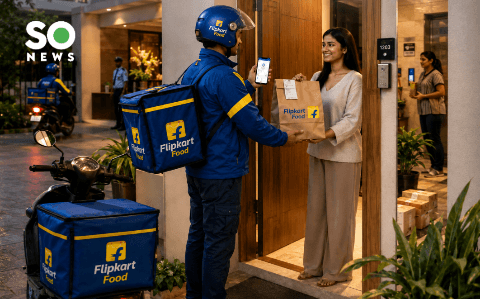
Flipkart is preparing to enter India’s highly competitive online food delivery market with the launch of its food delivery service in Bengaluru by mid-August. The Walmart-owned ecommerce company plans to charge restaurants a commission of just 10–11% per order, significantly lower than the rates typically charged by existing market leaders.
The move represents Flipkart’s latest expansion beyond ecommerce and quick commerce as it seeks to build a stronger presence in high-frequency consumer services. By offering restaurants a lower-cost alternative, the company hopes to attract partners that have been increasingly dissatisfied with the commission structures of existing food delivery platforms.
What Happened?
Flipkart is expected to begin its food delivery operations with a pilot launch in Bengaluru during the second half of August. The company has already started onboarding restaurants across the city ahead of the rollout.
Unlike the existing market model, Flipkart plans to charge restaurants a commission of around 10–11% per order. Industry estimates suggest that major food delivery platforms such as Swiggy and Zomato generally charge restaurants between 25% and 35%, depending on business agreements, order volumes, promotional campaigns, and city-specific commercial terms.
The company is also exploring whether the service should be integrated into the main Flipkart app, offered through a separate application, or made available through both platforms. To accelerate merchant onboarding, Flipkart will leverage the Open Network for Digital Commerce (ONDC), India’s government-backed initiative designed to create an open digital commerce ecosystem.
Key Details
Flipkart’s entry comes at a time when restaurant owners have become increasingly vocal about the high commissions and advertising expenses associated with food delivery platforms.
Several restaurant associations in Bengaluru have recently urged leading delivery companies to address concerns over commissions and related charges. This growing dissatisfaction has created an opportunity for new entrants offering more favourable commercial terms.
The competitive landscape is also evolving with mobility platform Rapido entering food delivery through its Ownly initiative, which has positioned itself as a zero-commission alternative for restaurants.
While Flipkart’s lower commission structure could make it easier to attract restaurant partners, building a large consumer base will be a much bigger challenge. Swiggy and Zomato have spent years investing in delivery infrastructure, customer loyalty programmes, restaurant partnerships, and marketing, creating strong network effects that are difficult for new entrants to replicate.
Why This Matters
India’s online food delivery market has largely been dominated by Swiggy and Zomato for several years. The arrival of Flipkart introduces another major technology company with deep financial resources and an established digital ecosystem.
A lower commission model could reduce operating costs for restaurants and improve their profitability, especially for small and medium-sized businesses that have long expressed concerns over platform fees.
For consumers, increased competition could eventually translate into better pricing, improved service quality, and more promotional offers as platforms compete for market share.
Company Background
Flipkart is one of India’s largest ecommerce companies and is headquartered in Bengaluru. Founded in 2007 by Sachin Bansal and Binny Bansal, the company began as an online bookstore before expanding into categories such as electronics, fashion, groceries, appliances, and digital payments.
The company has been majority-owned by Walmart since 2018 and has continued expanding its digital ecosystem through logistics, fintech, and quick commerce. In 2024, Flipkart entered the rapid delivery segment with Flipkart Minutes, enabling faster delivery of groceries and everyday essentials.
The upcoming food delivery service marks another strategic step in broadening its consumer offerings beyond traditional ecommerce.
Industry Impact
Flipkart’s entry is expected to intensify competition in India’s online food delivery industry.
Restaurants could gain greater bargaining power as multiple platforms compete to onboard partners with better commercial terms. Increased competition may also encourage existing players to revisit commission structures, promotional policies, and merchant support programmes.
For the broader digital commerce sector, Flipkart’s use of ONDC could further strengthen adoption of open-network commerce models and encourage more businesses to participate in interoperable digital marketplaces.
However, attracting regular customers and ensuring timely deliveries will require substantial investments in logistics, technology, customer acquisition, and delivery partner networks.
Future Plans
The Bengaluru rollout will serve as Flipkart’s pilot programme before any wider expansion. The company is expected to evaluate customer adoption, restaurant participation, and operational performance before entering additional cities.
If the pilot proves successful, Flipkart could gradually expand the service across major Indian metropolitan markets while integrating food delivery into its broader digital ecosystem alongside ecommerce, grocery delivery, and quick commerce offerings.
Conclusion
Flipkart’s planned entry into India’s food delivery market signals a major shift in an industry long dominated by two established players. By introducing a significantly lower commission model and leveraging ONDC for restaurant onboarding, the company aims to position itself as a more restaurant-friendly alternative.
Although winning customer loyalty will take time, Flipkart’s scale, technology capabilities, and existing consumer base could make it an important new competitor, potentially reshaping pricing dynamics and competition in India’s fast-growing online food delivery market.