Startup Originals Team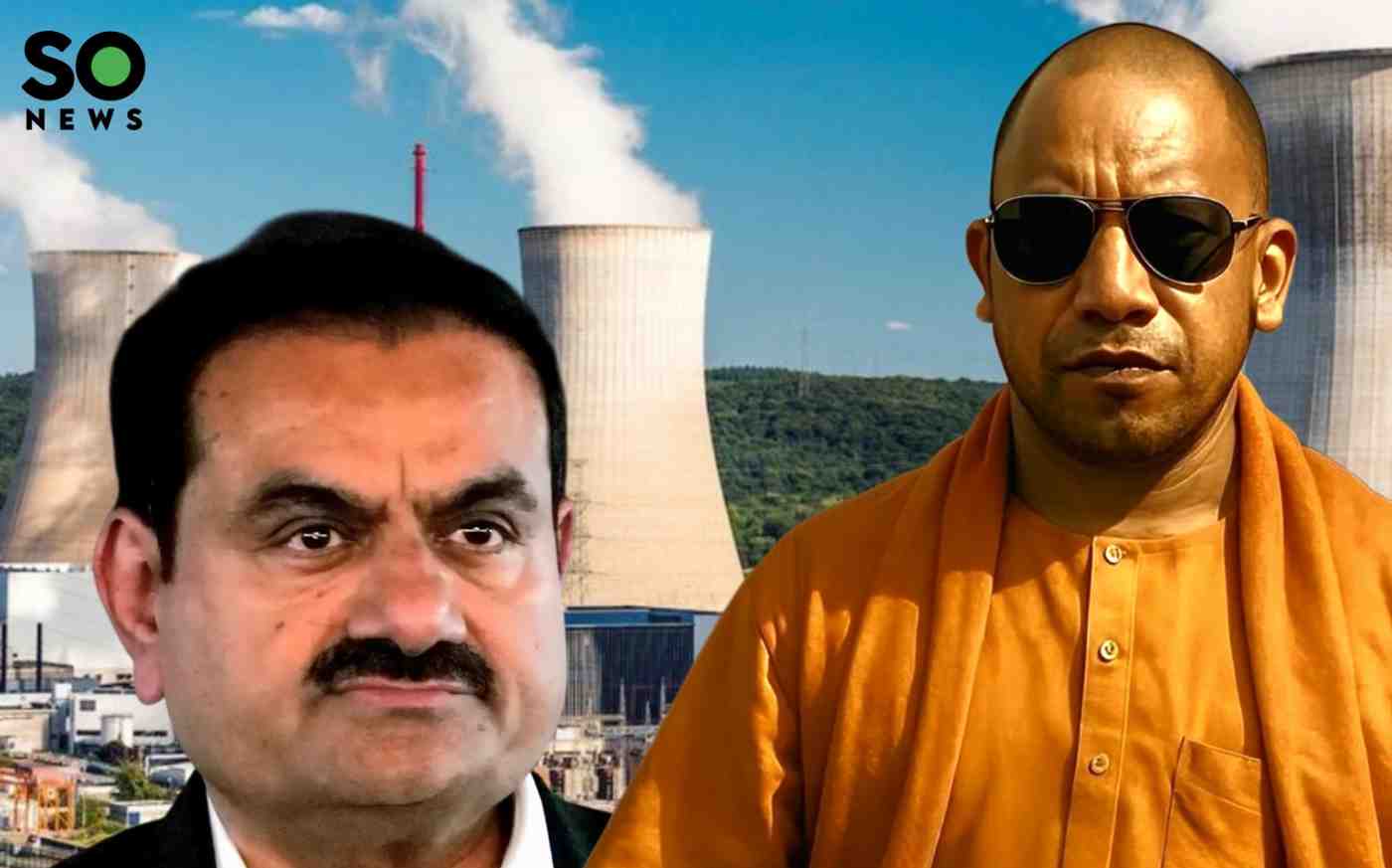
The Adani Group, led by billionaire Gautam Adani, is in advanced discussions with the Uttar Pradesh government to establish its first commercial nuclear power project in India, marking a significant milestone as the country opens up its nuclear energy sector to private investment and participation. This development comes alongside broader government measures, including a ₹200 billion allocation for nuclear research and development, aimed at boosting the country’s clean energy capacity and technological leadership in advanced reactor designs.
Adani’s Nuclear Power Ambitions in Uttar Pradesh:
According to reports, the Adani Group is exploring a partnership with the Uttar Pradesh state government to build a nuclear power facility using Small Modular Reactors (SMRs), next-generation nuclear technology that allows modular construction and scalability. The proposal under discussion could involve eight SMRs of 200 megawatts each, giving the project a total capacity of around 1,600 megawatts (MW). The talks are at a preliminary stage, and a specific site has yet to be finalised.
This move represents a strategic shift for Adani as the conglomerate seeks to expand its clean energy portfolio beyond solar, wind and green hydrogen into nuclear power, which is seen as a reliable, low-carbon energy source capable of supporting India’s growing electricity needs.
Context: Private Sector Entry and Government Policy
India’s Parliament recently passed a landmark atomic energy bill that opens the civil nuclear power sector to private and foreign investment, ending decades of state monopoly over nuclear power generation. This major policy change is aimed at accelerating capacity growth, inviting investment, and enabling technology partnerships with global companies, with an ambitious target of achieving 100 gigawatts (GW) of nuclear power capacity by 2047.
Against this backdrop, the Nuclear Energy Mission, announced in the Union Budget 2025–26, includes a ₹200 billion outlay for research and development of SMRs and related nuclear technologies, with the aim of operationalising several indigenously designed reactors by the early 2030s. This funding boost is expected to support public and private efforts alike in advancing safe, efficient nuclear power solutions.
What SMRs Mean for India’s Power Landscape:
Small Modular Reactors are compact nuclear units designed for modular deployment and reduced construction risk, making them attractive for both utility grids and industrial uses. Their modular nature allows installations to be built faster and with lower upfront costs compared with traditional large nuclear plants, while still offering high output and reliability, features critical for India’s rapid electrification and decarbonisation goals.
In addition to clean base-load power, SMRs have the potential to support grid stability, reduce dependence on fossil fuels, and complement renewable energy sources like wind and solar, which are less consistent on their own. With the government encouraging private participation through regulatory reforms and research funding, private players like Adani may become key contributors to the next wave of India’s nuclear energy expansion.
Implications for Adani and the Energy Sector:
If realised, the Uttar Pradesh nuclear project would be a landmark achievement for the Adani Group, marking its entry into one of the most tightly regulated sectors of the economy. A successful partnership with the state and the Bhabha Atomic Research Centre (BARC), which is supporting SMR design efforts , could position Adani among the first Indian private conglomerates to operate commercial nuclear power facilities.
The project is also expected to drive advanced engineering capabilities, create high-skill jobs in reactor construction and operations, and provide a stable, long-term source of clean electricity for the region.
Conclusion:
The Adani Group’s planned nuclear power project in Uttar Pradesh, amid India’s historic opening of its civil nuclear sector to private investment, signals a new chapter in the country’s energy transition. With support from government policy, significant R&D investment (₹200 billion), and emerging SMR technology, India is poised to expand its nuclear capacity while enabling private firms to play a central role in delivering clean, reliable and scalable power for decades to come.