Startup Originals Team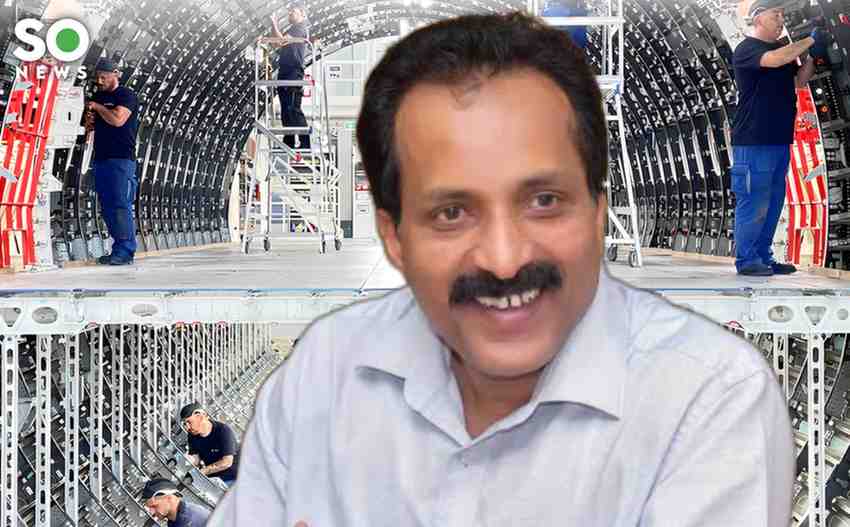
Former ISRO chairman S Somanath has sparked an important debate on India’s aerospace ambitions by questioning whether startups currently possess the depth of skills required to innovate meaningfully in aerospace hardware development. His remarks come at a time when India is witnessing a surge in private participation in the space and defence sectors.
Concerns Over Hardware Capabilities
Speaking at a recent public forum, Somanath acknowledged the enthusiasm and growing number of startups entering the aerospace domain but expressed concern about their preparedness to handle complex, high-precision hardware challenges. He pointed out that while many startups excel in software, simulations, and digital solutions, aerospace hardware demands long-term experience, rigorous testing, and deep engineering expertise.
Why Aerospace Is Different
According to Somanath, aerospace systems operate in extreme environments where failure is not an option. Launch vehicles, satellites, propulsion systems, and avionics require years of validation, strict quality control, and reliability standards that are difficult to master quickly. He cautioned that innovation in this sector cannot rely solely on rapid prototyping or short development cycles common in other tech industries.
Role of ISRO and Industry Collaboration
Somanath stressed that organizations like Indian Space Research Organisation have built capabilities over decades through sustained research, institutional knowledge, and large engineering teams. He suggested that startups should focus on collaboration rather than competition, leveraging ISRO’s experience, testing facilities, and mentorship to bridge existing skill gaps.
A Reality Check for India’s Space Startup Boom
India’s space startup ecosystem has attracted global attention and significant investment, especially after policy reforms opened the sector to private players. However, Somanath’s comments serve as a reality check, highlighting that true aerospace innovation requires patience, capital, and specialised talent, not just entrepreneurial speed.
The Way Forward
While critical of current limitations, Somanath clarified that he is not pessimistic about startups. Instead, he called for stronger academic-industry links, deeper R&D investments, and long-term skill-building to ensure that India’s aerospace startups can evolve from component suppliers to genuine system innovators.
As India pushes toward becoming a global aerospace and space technology hub, the former ISRO chief’s observations underline a crucial truth: ambition must be matched with capability for the sector to truly take off.