Startup Originals Team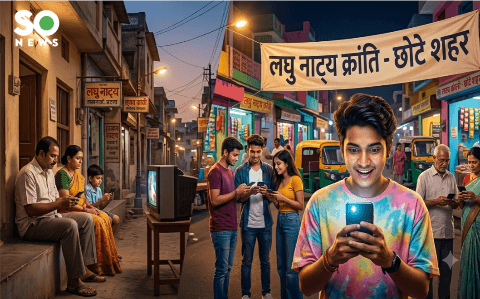
India’s entertainment startup ecosystem is witnessing the emergence of a new content format: microdramas.
These short, vertical-format stories are designed primarily for mobile audiences and are typically consumed in quick viewing sessions. While the format gained popularity in China, Indian companies are now developing their own approach to the category.
The growing interest comes as audiences across different languages and smaller cities increasingly consume short-form digital entertainment.
For startups entering the space, however, attracting viewers is only one part of the challenge. Rising customer acquisition costs are creating pressure on companies to find sustainable ways to build audiences and retain users.
What Is Driving India’s Microdrama Market?
Microdramas are built around short, fast-moving stories that can be watched easily on smartphones.
The format fits into the growing preference for quick digital entertainment, particularly among mobile-first audiences.
India’s diverse language market also creates an opportunity for companies to develop stories specifically for regional audiences rather than depending entirely on mainstream Hindi or English content.
The growing popularity of short-form video has already created a large audience accustomed to consuming entertainment in brief sessions.
Microdrama platforms are now attempting to take this behaviour a step further by packaging complete stories into short vertical episodes.
From Chinese Format to Indian Opportunity
Microdramas may have originated in China, but the format is now finding room to evolve in India.
The Indian market is significantly different because of its linguistic and cultural diversity.
A format that works in one region may not necessarily work across the country. This creates an opportunity for startups to experiment with local stories, languages, characters and cultural themes.
Regional content could become one of the most important factors in determining whether microdrama platforms can build a large and loyal Indian audience.
Smaller Cities Could Become a Major Growth Market
One of the key opportunities emerging around microdramas is India’s smaller cities.
Digital entertainment is no longer restricted to major metropolitan areas. Affordable smartphones, mobile internet and social media have expanded access to online content across the country.
For microdrama companies, this creates the possibility of reaching audiences that may not always be served by traditional entertainment platforms.
Producing short stories in regional languages could further help companies connect with these viewers.
This makes India’s microdrama opportunity less about simply copying an international entertainment format and more about adapting it to the country’s highly fragmented audience.
Customer Acquisition Is Becoming a Challenge
Despite the opportunity, the sector faces an important business problem.
Customer acquisition costs are rising.
For emerging platforms, attracting users can require significant spending on advertising, influencer campaigns and other digital marketing channels.
If users download an application but do not continue watching or paying for content, the cost of acquiring them can become difficult to recover.
This means microdrama startups will need to focus not only on attracting viewers but also on creating content that encourages repeat consumption.
Content Could Decide the Winners
The competitive landscape is likely to depend heavily on the quality and relevance of the content being produced.
Short episodes need to capture attention quickly because viewers can easily move to another platform.
Storytelling therefore becomes particularly important.
Companies that understand local preferences and produce stories that encourage viewers to continue watching could have an advantage over platforms that simply reproduce formats developed for other markets.
The ability to produce content at scale while controlling costs will also be important as competition increases.
Why Microdramas Matter for Indian Startups
The rise of microdramas highlights another opportunity within India’s digital economy.
Startups are increasingly building businesses around changing consumer behaviour rather than traditional industries.
The format combines several trends already visible in India’s internet market: smartphone usage, short-form video consumption, regional-language content and mobile entertainment.
If the category develops successfully, it could create opportunities for content creators, production companies, technology platforms and advertisers.
It could also give regional storytellers another avenue to reach audiences beyond traditional television and cinema.
The Road Ahead
India’s microdrama industry is still developing, and the long-term business model remains an important question.
Startups will need to balance content production costs with user acquisition and monetisation.
They will also have to compete for consumer attention against established entertainment platforms and social media applications that already have large user bases.
The companies that succeed may be those that can combine strong storytelling with efficient distribution and a clear understanding of India’s regional audiences.
Conclusion
India’s microdrama market is moving from an emerging content trend toward a potentially significant startup opportunity.
The format’s mobile-first nature, short episodes and potential for regional storytelling make it particularly suited to India’s diverse digital audience.
But the road to scale will not be easy. Rising customer acquisition costs and intense competition mean startups will have to prove that viewers are willing to keep coming back.
For now, India’s microdrama battle is only beginning.
The bigger question is whether Indian startups can take a format that gained popularity elsewhere and turn it into a distinctly Indian entertainment category built around local stories, languages and audiences.