Startup Originals Team
The Government of India has announced a major step towards improving the country’s public examination system by appointing Infosys cofounder Nandan Nilekani to lead a high-level task force on examination reforms. The panel has been created by Prime Minister Narendra Modi to recommend technology-driven solutions that can make competitive exams more transparent, secure, and reliable.
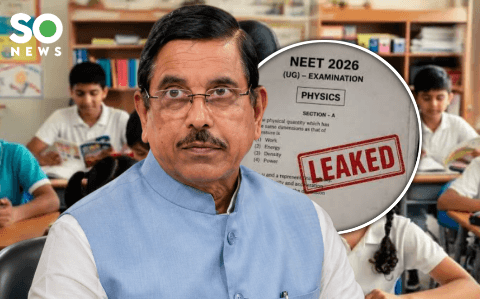
The decision comes after months of public concern over alleged irregularities and paper leak incidents in several competitive examinations, including NEET. The Centre hopes that bringing together experts from technology, education, intelligence, and public administration will help restore confidence in India’s examination process while reducing the chances of malpractice.
What Happened?
Prime Minister Narendra Modi has constituted a high-powered committee under the leadership of Nandan Nilekani to modernise India’s public examination system. The task force has been asked to recommend practical reforms that use advanced technology to strengthen the conduct of government examinations across the country.
The panel will study existing examination processes, identify weaknesses that have enabled paper leaks and other irregularities, and suggest measures to improve security at every stage. Its recommendations are expected to include the use of digital technologies, stronger identity verification, better data protection, secure question paper management, and improved monitoring systems.
The announcement was made shortly after the Union Government reached an agreement with student protestors demanding greater accountability following concerns surrounding the NEET examination. The formation of the task force signals the government’s commitment to preventing similar incidents in the future.
Key Details
Nandan Nilekani, widely recognised for leading India’s digital identity initiative Aadhaar after cofounding Infosys, will head the expert committee. His experience in building large-scale digital infrastructure is expected to play an important role in designing a secure examination ecosystem.
The task force includes specialists from multiple sectors, including technology, cybersecurity, education, intelligence, and public administration. This multidisciplinary approach is intended to ensure that recommendations address both technological and administrative challenges.
Among the key areas expected to be examined are digital encryption of question papers, secure distribution mechanisms, AI-powered monitoring tools, enhanced candidate verification, real-time tracking of examination materials, and stronger coordination between examination authorities and law enforcement agencies.
The committee is also expected to recommend long-term reforms that improve transparency while ensuring fairness for millions of students appearing in public examinations every year.
Why This Matters
Public examinations play a crucial role in admissions to higher education institutions and recruitment for government jobs. Any compromise in examination integrity can affect the careers of millions of students and reduce public confidence in the education system.
Recent allegations of paper leaks and irregularities have sparked nationwide protests and raised concerns about the security of large-scale examinations. By focusing on technology-led reforms, the government aims to minimise human intervention in sensitive processes, improve accountability, and rebuild trust among students, parents, and educational institutions.
A stronger examination framework could also reduce legal disputes, delays in admissions, and repeated examinations that create additional financial and emotional stress for candidates.
Company Background
Infosys is one of India’s largest information technology companies and is headquartered in Bengaluru. Founded in 1981 by N.R. Narayana Murthy and six other cofounders, including Nandan Nilekani, the company provides digital transformation, cloud computing, artificial intelligence, consulting, and business technology services to clients across the world.
Nilekani served as Infosys’ Chief Executive Officer before taking leadership roles in several national digital initiatives. He later became the founding chairman of the Unique Identification Authority of India (UIDAI), which introduced the Aadhaar digital identity programme. His work in digital public infrastructure has earned recognition both in India and internationally.
Industry Impact
The creation of the task force could accelerate the adoption of advanced digital technologies across India’s examination ecosystem. Testing agencies may increasingly invest in secure cloud infrastructure, AI-based surveillance, biometric authentication, encrypted communication systems, and cybersecurity solutions.
Technology companies specialising in digital identity, cybersecurity, examination software, and data protection could benefit from future government initiatives arising from the committee’s recommendations.
For students, the reforms could lead to a more transparent examination process with stronger safeguards against fraud. Educational institutions and recruitment agencies may also gain from improved credibility and more efficient examination management.
Future Plans
The task force is expected to submit recommendations after reviewing the current examination framework and consulting with relevant stakeholders. The government will evaluate these proposals before implementing reforms across various national and state-level examinations.
Future initiatives may include the rollout of new digital examination standards, enhanced cybersecurity protocols, greater use of artificial intelligence for monitoring, and improved coordination between examination authorities and security agencies. These measures are intended to strengthen the integrity of India’s public examination system over the long term.
Conclusion
The appointment of Nandan Nilekani to lead the Prime Minister’s task force marks an important step in the government’s efforts to modernise India’s public examination system. By combining expertise from technology, education, and administration, the committee is expected to recommend reforms that improve transparency, strengthen security, and reduce the risk of paper leaks.
If implemented effectively, the recommendations could help restore public confidence, protect the interests of millions of students, and create a more reliable and technology-driven examination framework for the future.