Startup Originals Team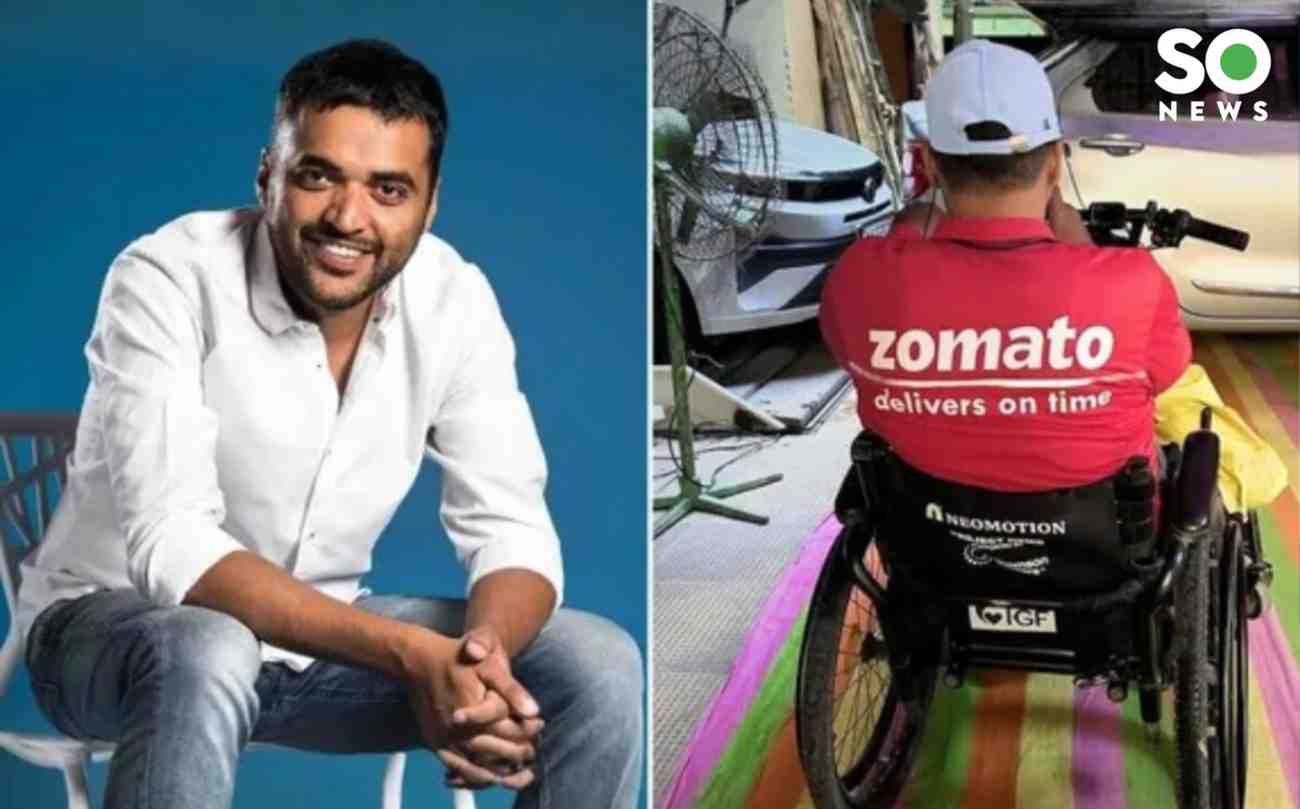
A heartfelt post by a Zomato customer has gone viral, drawing attention to how thoughtful systems can make a big difference, especially when supporting delivery partners with disabilities. In the shared experience, the customer praises Zomato for a delivery by a partner using a wheelchair, calling it “a great example of inclusive efficiency.”
A Customer’s Experience That Struck a Chord:
Mumbai-based professional Maira Q. shared that shortly after placing an order via the Zomato app, she received an automated call. The message informed her that the assigned delivery partner uses a wheelchair and asked whether she’d like to continue with the order or choose an alternate.
A few minutes later the delivery partner himself called and explained his situation and requested that Maira come downstairs to collect the parcel, given his condition. Maira described the interaction as “warm, respectful, and effortless,” adding that the entire experience was smooth and timely.
In her words:
“The order arrived on time. The communication was clear. The experience was seamless… This is what thoughtful inclusion looks like, where accessibility is integrated into everyday operations. No special effort, just smart design.”
What Zomato’s Approach Showcases:
Respectful communication and choice
By proactively informing the customer and giving the option to switch, Zomato lets both the delivery partner and the customer engage in a comfortable and dignified manner. The process preserves respect and autonomy for the differently-abled partner and offers transparency to the customer.
Service reliability meets inclusivity
Even with the additional communication step, the delivery was executed on schedule, demonstrating that inclusion does not have to compromise efficiency. The customer highlighted that the system worked “without special effort” and the service standards remained high.
A model for gig-economy inclusivity
The story resonated with many online who saw this as more than an isolated case, they viewed it as proof that platforms can and should design for accessibility from the ground up, enabling people with disabilities to participate meaningfully in service roles.
Why This Matters:
- For delivery partners with disabilities: It signals that platforms can provide supportive systems rather than barriers, enabling work with dignity and agency.
- For customers: It fosters a sense of respect, transparency and trust, being informed and given a choice rather than unknowingly engaging with hidden conditions.
- For companies in the gig economy: It highlights that inclusivity and operational excellence are not mutually exclusive, smart design can align both goals.
- For broader society: It offers a practical blueprint of how everyday service systems can be structured to include rather than exclude persons with disabilities, moving from adaptation to design-inclusion.
What to Watch Going Forward:
- Scaling the model: Will Zomato extend this kind of communication and choice mechanism to more delivery partners with diverse disabilities?
- Partner support & training: Ensuring that differently-abled partners receive adequate support, tools and training to manage tasks and customer interaction.
- Customer feedback & policy: Monitoring how customers respond to such inclusive approaches and how company policies evolve to integrate accessibility as standard practice.
- Industry benchmark: Whether other platforms adopt similar inclusive-design practices, making this kind of protocol a norm rather than exception.