Startup Originals Team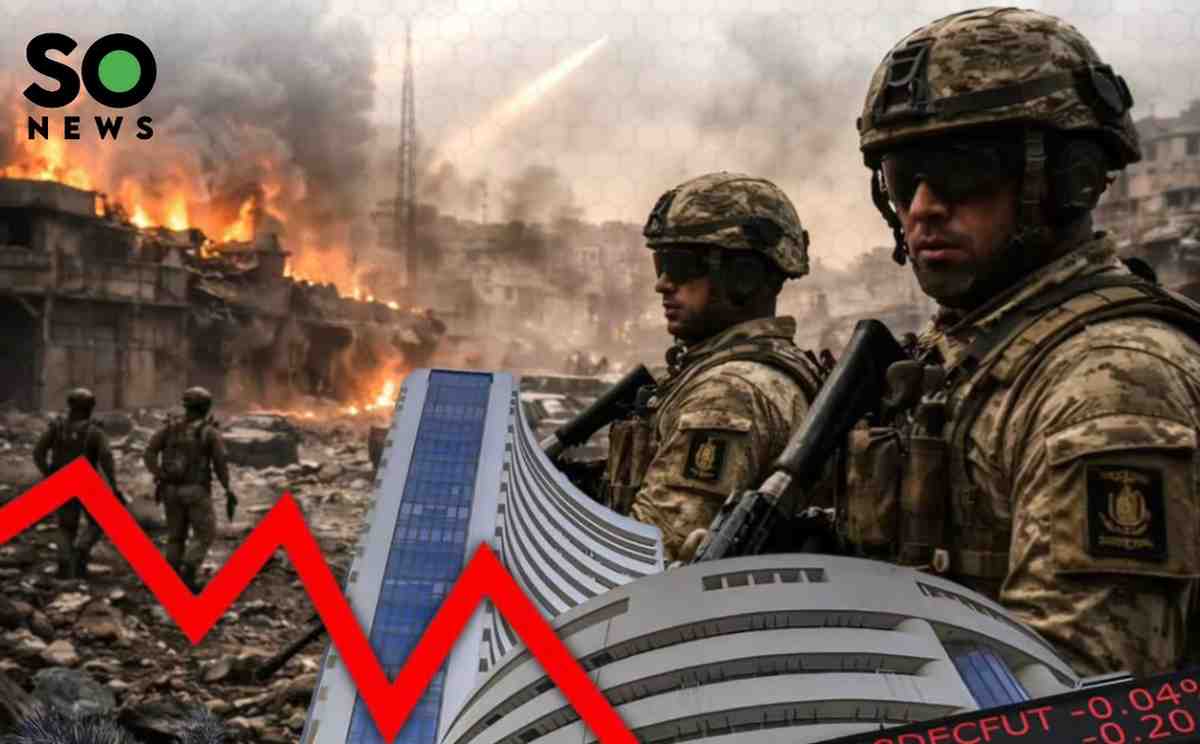
The ongoing geopolitical tensions between the United States and Iran have led to a sharp correction in Indian equity markets, erasing over ₹41 lakh crore in investor wealth since late February 2026. The total market capitalisation of companies listed on the Bombay Stock Exchange (BSE) has dropped nearly 9%, falling from around ₹463 lakh crore to ₹422 lakh crore.
What Caused the Sharp Market Fall?
The decline is being driven by a combination of global and domestic factors:
- Geopolitical uncertainty: Escalating tensions in the Middle East have shaken global investor confidence
- Rising crude oil prices: Supply fears have pushed oil prices higher, increasing inflation risks for India
- FII selling pressure: Foreign investors have pulled out funds amid global risk aversion
- Weak market sentiment: Panic-driven selling has intensified the correction across sectors
Since India imports a significant portion of its oil, higher crude prices directly impact inflation, fiscal balance, and corporate margins.
Broad-Based Sell-Off Across Sectors
The correction has not been limited to a single sector. Stocks across:
- Banking
- IT
- FMCG
- Auto
- Infrastructure
…have seen declines, reflecting a broad-based risk-off sentiment in the market.
Valuations Becoming More Reasonable
Market expert VK Vijayakumar noted that despite the fall, valuations are now more attractive. The Nifty is trading at around 19x earnings, slightly below its long-term average.
This suggests that while sentiment is weak, the correction has brought some valuation comfort for long-term investors.
Key Risk: Duration of the Conflict
The biggest uncertainty remains how long the conflict continues. Prolonged tensions could:
- Keep oil prices elevated
- Impact global growth
- Reduce corporate earnings
- Delay market recovery
Markets are likely to remain volatile until there is clarity on the geopolitical situation.
What Should Investors Do Now?
Experts are advising discipline over panic:
- ✅ Avoid panic selling during sharp corrections
- ✅ Focus on fundamentally strong, quality stocks
- ✅ Diversify portfolios across sectors
- ✅ Use market dips as buying opportunities
- ✅ Maintain a long-term investment horizon
Short-Term Pain, Long-Term Opportunity
While the ₹41 lakh crore wealth erosion is significant, corrections are a natural part of market cycles—especially during global crises. Historically, such periods have often created strong entry points for patient investors.
The Bottom Line
The US-Iran conflict has triggered short-term turbulence in Indian markets, but it has also brought valuations closer to fair levels. The next phase of the market will depend largely on geopolitical developments and energy prices.
For now, the message from experts is clear:
Stay calm, stay invested, and think long term.