Startup Originals Team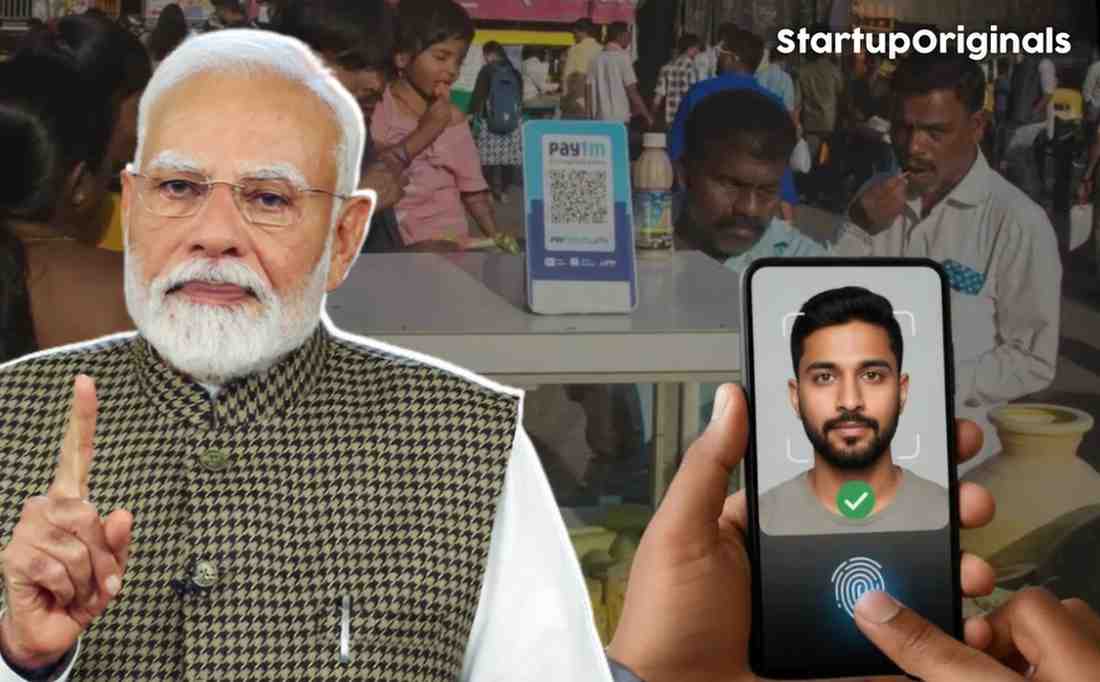
From October 8, 2025, India’s Unified Payments Interface (UPI) will allow users to authorize transactions using facial recognition or fingerprints, eliminating the need for a PIN. This shift to biometric authentication marks a major upgrade in India’s digital payments infrastructure.
What’s Changing: PIN No More, Biometric YES
- UPI users will now be able to approve payments by scanning their face or fingerprint, as biometric authentication becomes a recognized mode of secure transaction approval.
- This change replaces the traditional requirement of entering a numeric UPI PIN for each transaction, making payments more seamless.
- The initiative has been announced at the Global Fintech Festival 2025, where officials revealed the biometric upgrade will be rolled out starting October 8.
How It Will Work:
1. Aadhaar-Linked Biometrics
The system will use biometric data (face scans, fingerprints) stored in Aadhaar as the basis for authentication.
2. On-device Verification
Users’ devices (smartphones, tablets) will handle the local scan and match. If the biometric matches the Aadhaar record, the transaction will be authorized without entering a PIN.
3. Limits & Safeguards
- A daily transaction limit may apply when using biometric authentication.
- Banks will perform cryptographic checks behind the scenes to verify authenticity, ensuring each transaction remains secure.
- For PIN setup or reset, Aadhaar-based facial verification will also be used.
- Users will have to give fresh consent whenever a device is bound for biometric use.
Why This Matters:
Faster, Frictionless Payments
Users won’t need to remember or type a PIN. Simply scan your face or fingerprint, and your transaction will be complete.
Enhanced Security
Biometric traits are unique to each individual, making it far harder for someone else to replicate your fingerprint or face compared to guessing a PIN.
Increased Financial Inclusion
This change may especially benefit senior citizens and those who struggle with remembering PINs or managing digital interfaces.
Challenges & Considerations:
- Privacy & Data Protection: With biometric data in use, safe storage, processing, and consent mechanisms are critical to prevent misuse.
- Device Compatibility: Not all devices may support reliable biometric sensors, potentially causing authentication failures in some cases.
- Fallbacks & Edge Cases: There must be mechanisms for users whose biometric data may not match (due to injury, wear & tear, etc.) or in low-light or sensor-error scenarios.
- Regulatory & Implementation Hurdles: Ensuring that banks, UPI apps, and devices harmonize their systems for rolling out this feature broadly will require careful coordination.