Startup Originals Team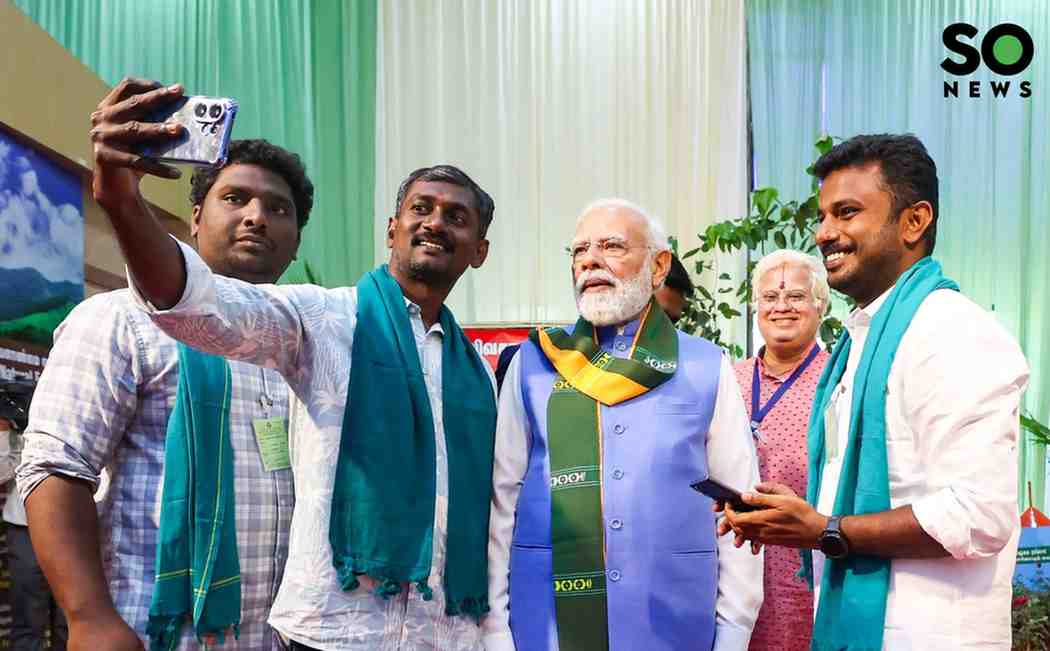
At the inaugural session of the South India Natural Farming Summit 2025 held in Coimbatore on 19 November 2025, Narendra Modi declared that India is “on the path to becoming the global hub of natural farming”. He emphasised that natural farming is not an imported concept but deeply rooted in Indian tradition and suited to the country’s environment.
Vision for Natural Farming and Youth Engagement:
Prime Minister Modi outlined a vision where agriculture becomes a modern, scalable opportunity for India’s youth, thereby empowering the rural economy. He said that as biodiversity evolves and young people embrace farming, natural farming will play a central role. He further urged farmers to adopt the “one acre, one season” model, trying natural farming on one acre in a season and then scaling up based on results.
Emphasis on Science-Based, Indigenous Agriculture:
Modi stressed that natural farming is an indigenous Indian idea, born from traditional practices like Panchagavya, Jeevamrit and mulching. He noted that to achieve scale and credibility, this movement must become fully science-backed, with research institutions treating farmers’ fields as living labs.
South India: A Living University of Agriculture
He spotlighted South India, particularly Tamil Nadu, Kerala and Karnataka, as regions where agriculture has deep heritage: ancient dams, multi-storey cropping models, integrated farming systems. This region, he said, will lead the way in natural farming for India and the world.
Policy Support and Farmer Welfare Measures:
During the event, Modi also announced key measures supporting farmers:
- Release of the 21st instalment of the Pradhan Mantri Kisan Samman Nidhi (PM‑KISAN) scheme, with ₹18,000 crore transferred to farmers.
- Highlighting that through the Kisan Credit Card (KCC) scheme, over ₹10 lakh crore has been disbursed in the current year to farmers, livestock and fisheries sectors included.
Why This Matters:
The Prime Minister’s remarks signal a major push by the government to shift Indian agriculture from conventional chemical-intensive models to natural, regenerative, climate-resilient farming systems. With global demand for organic and chemical-free produce growing, positioning India as a hub for natural farming could open export and livelihood opportunities while protecting soil health and biodiversity.
Looking Ahead: What to Watch
- How effectively states scale the “one acre, one season” model across diverse regions.
- The development of scientific infrastructure and research backing for natural farming practices.
- Growth in Farmer Producer Organisations (FPOs) and supply-chain linkages for natural-farming output.
- Expansion of global market access for India’s natural-farming produce and value-added products.