Startup Originals Team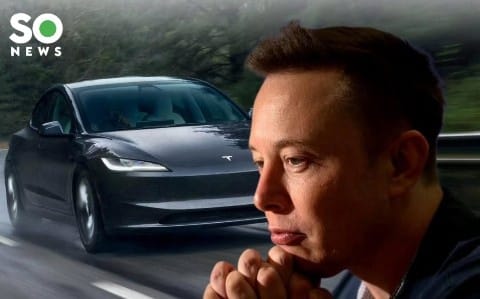
Electric vehicle manufacturer Tesla sold just 342 units in India during FY2025-26, according to retail data from the Federation of Automobile Dealers Associations (FADA). The company opened its first showroom in India in July 2025 and began retail deliveries in September, offering only the Model Y rear-wheel drive variant, priced between ₹59.89 lakh and ₹67.89 lakh.
While the number looks small on paper, the story behind it reveals a lot about India’s fast-growing but price-sensitive EV market.
If you are tracking how global brands fare in India and what it means for the startup and EV ecosystem, this is worth paying attention to.
Tesla’s India Entry: Slow Start, Big Name
Tesla entered India with massive hype. The first showroom opened in Mumbai’s BKC area in July 2025, followed by an experience centre at Delhi’s Aerocity and a full-scale retail and service hub in Gurugram.
But the sales numbers tell a different story. Tesla sold 225 units in the calendar year 2025 (September to December) and 342 units across FY26. To put that in perspective, Tesla sells roughly 100 units globally every four hours. In India, it took an entire fiscal year to sell 342.
The Model Y is currently the only model on offer. All units are completely built units (CBU) imported with 100 to 110 percent import duties. Tesla has not committed to local manufacturing in India, even as the government has been considering reducing duties to 40 to 70 percent for companies that invest in domestic production.
Despite the modest numbers, Tesla placed fourth in India’s luxury EV segment in FY26, ahead of Porsche, Audi, and Rolls-Royce. In a luxury EV market that totalled 5,404 units for the year, 342 units gave Tesla a visible share in its very first year.
Meanwhile, India’s EV Market Is Booming
Tesla’s slow start should not be confused with a slow EV market. India’s electric passenger vehicle segment recorded 1,99,923 units sold in FY26, an 83.6% year-on-year growth compared to 1,08,873 units in FY25. EVs now account for 4.2% of the overall passenger vehicle market.
Total EV sales across all categories, including two-wheelers, three-wheelers, and passenger vehicles, crossed 24.5 lakh units in FY26, growing nearly 24.6% year on year.
The market leaders tell the real story of where demand is:
Tata Motors sold nearly 78,000 EVs and remained the market leader
Mahindra and Mahindra sold 42,271 units and emerged as a strong second player
BMW India sold 3,537 luxury EVs, up 124% year on year, driven by the locally assembled iX1 LWB priced from ₹51.40 lakh
BYD maintained a strong lead in the premium-affordable segment with over 1,100 units in just the festive months
VinFast, entering India around the same time as Tesla, sold 2,390 units, nearly seven times Tesla’s volume, by pricing its models in the ₹25 to 35 lakh range
The pattern is clear. Brands offering locally assembled or competitively priced EVs are winning. Premium imports without local production are struggling.
Why Tesla Is Struggling in India
Several factors explain Tesla’s slow start:
Price is the biggest barrier. The Model Y starts at ₹59.89 lakh, which places it in the luxury segment. Most Indian EV buyers are looking in the ₹10 to 30 lakh range.
Import duties of 100 to 110 percent on CBU imports make the car significantly more expensive than it would be if assembled locally. BMW avoided this by assembling the iX1 in Chennai under the CKD route.
Single model availability limits the addressable market. Tesla is offering only one variant of the Model Y. Competitors like Tata, Mahindra, and BYD offer multiple models across price points.
Limited retail and charging infrastructure. Tesla has only a handful of showrooms and charging stations in India. The country currently has roughly 25,000 EV charging points, which is still far from adequate for mass adoption.
No local manufacturing commitment. In global markets like China and Europe, Tesla’s growth accelerated only after it set up local factories. Without a similar commitment in India, analysts say Tesla is unlikely to replicate that trajectory here.
What Should Startups and Businesses Take Away?
For founders and investors watching India’s EV ecosystem, Tesla’s experience carries some clear signals:
India’s EV market is price-first. The mass market opportunity lies in affordable EVs, not luxury imports. Startups building in the ₹10 to 25 lakh EV space or in EV components and charging infrastructure are positioned where the real volume is.
Local manufacturing is not optional. BMW, Tata, and Mahindra are winning because they build locally. Any startup or global brand entering India’s EV space needs a localisation strategy from day one.
Charging infrastructure remains a massive gap. With only 25,000 charging stations serving a market of 24.5 lakh EVs, startups in EV charging, battery swapping, and energy management have a long runway.
The luxury EV segment is small but growing. At 5,404 units in FY26 (up 61%), there is opportunity in premium EV services, accessories, and aftermarket solutions.
VinFast’s 2,390 units vs Tesla’s 342 shows that even new foreign brands can outperform if they get pricing right.
India’s EV revolution is real, and startuporiginals.in will keep tracking what this means for founders and investors.
The Bottom Line
Tesla selling 342 cars in its first year in India is not a failure of the EV market. It is a reminder that India plays by its own rules. Global brand power alone does not guarantee success here. Pricing, localisation, and distribution depth matter more than any logo on the hood.
The EV market grew 83.6% in FY26. The demand is there. The question for Tesla is whether it is willing to build for India the way it built for China. Until then, affordable, locally made EVs will continue to dominate.
Stay updated with India’s startup and business growth story. Explore more on Startup Originals: https://startuporiginals.in/