Startup Originals Team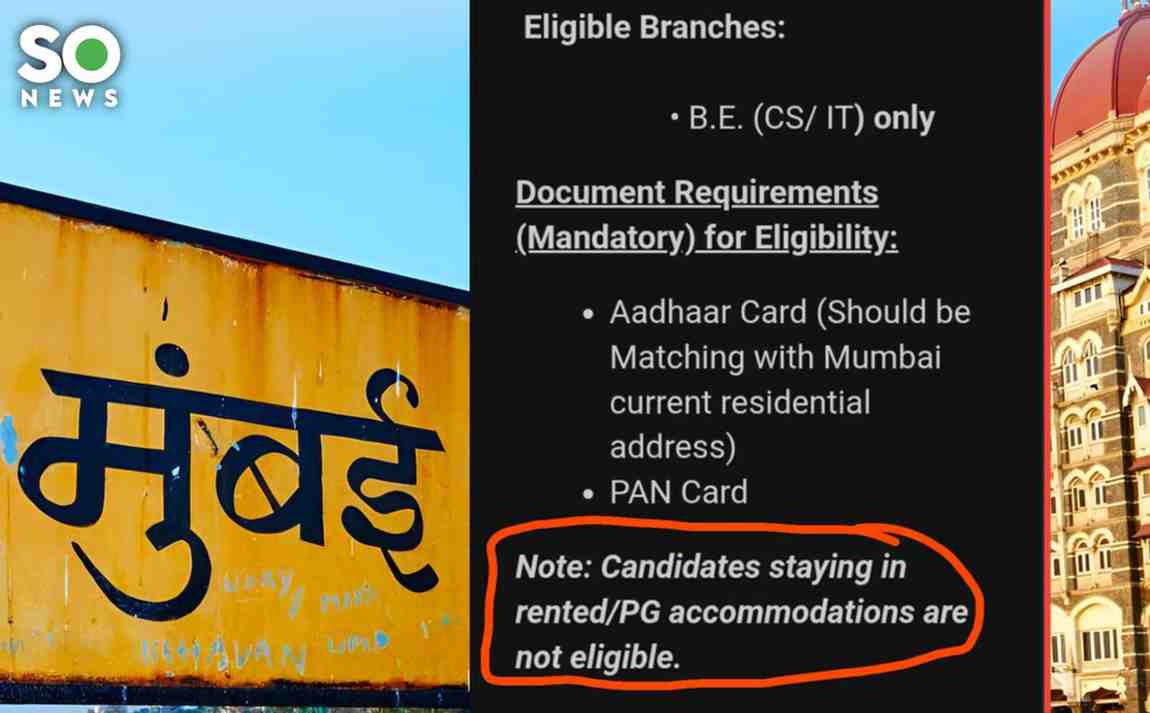
A Mumbai-based firm has sparked widespread outrage on social media after a hiring policy surfaced that allegedly disqualifies job candidates who live in rented accommodations or paying guest (PG) facilities. The controversial rule has triggered sharp criticism from professionals and netizens alike, who have called the move discriminatory and out of touch with urban realities.
What the Hiring Rule Says
According to screenshots and accounts shared online, the company’s recruitment criteria reportedly favour candidates who own homes, while explicitly excluding those staying in rented flats or PG accommodations. The policy came to light after job applicants shared their experiences of being questioned about their living arrangements during the hiring process.
Many users claimed they were either rejected or discouraged from applying further once they disclosed that they lived in rented homes or PGs, an arrangement common among young professionals in cities like Mumbai due to high property prices.
Why the Policy Triggered Outrage
The hiring rule quickly became a flashpoint online, with critics arguing that it unfairly penalises fresh graduates, migrants, and early-career professionals who rely on rental housing. Social media users pointed out that living in a rented flat or PG has no bearing on a candidate’s skills, work ethic, or performance.
Several professionals also highlighted that Mumbai’s real estate costs make home ownership unrealistic for a large section of the workforce, especially those in their 20s and early 30s. As a result, many viewed the policy as elitist and exclusionary.
Legal and Ethical Concerns Raised
The incident has also raised questions about the legality and ethics of such hiring practices. While Indian labour laws do not explicitly regulate housing-based discrimination in private hiring, experts argue that employment decisions should be based on merit, qualifications, and experience—not personal living conditions.
Human resource professionals online warned that such criteria could damage a company’s employer brand and discourage talented candidates from applying.
Online Reaction and Broader Debate
The controversy has reignited a broader conversation around hiring biases in India’s private sector. Netizens have compared the policy to other forms of indirect discrimination, calling for clearer standards around fair hiring practices.
As the discussion continues, many have urged companies to reassess outdated assumptions and align recruitment policies with the realities of modern urban life, where renting is often a necessity rather than a choice.
Conclusion
The Mumbai firm’s reported hiring rule has become a cautionary example of how restrictive policies can quickly backfire in the age of social media. While companies are free to define their recruitment standards, the backlash underscores a growing expectation that hiring should be inclusive, merit-based, and reflective of today’s workforce realities.