Startup Originals Team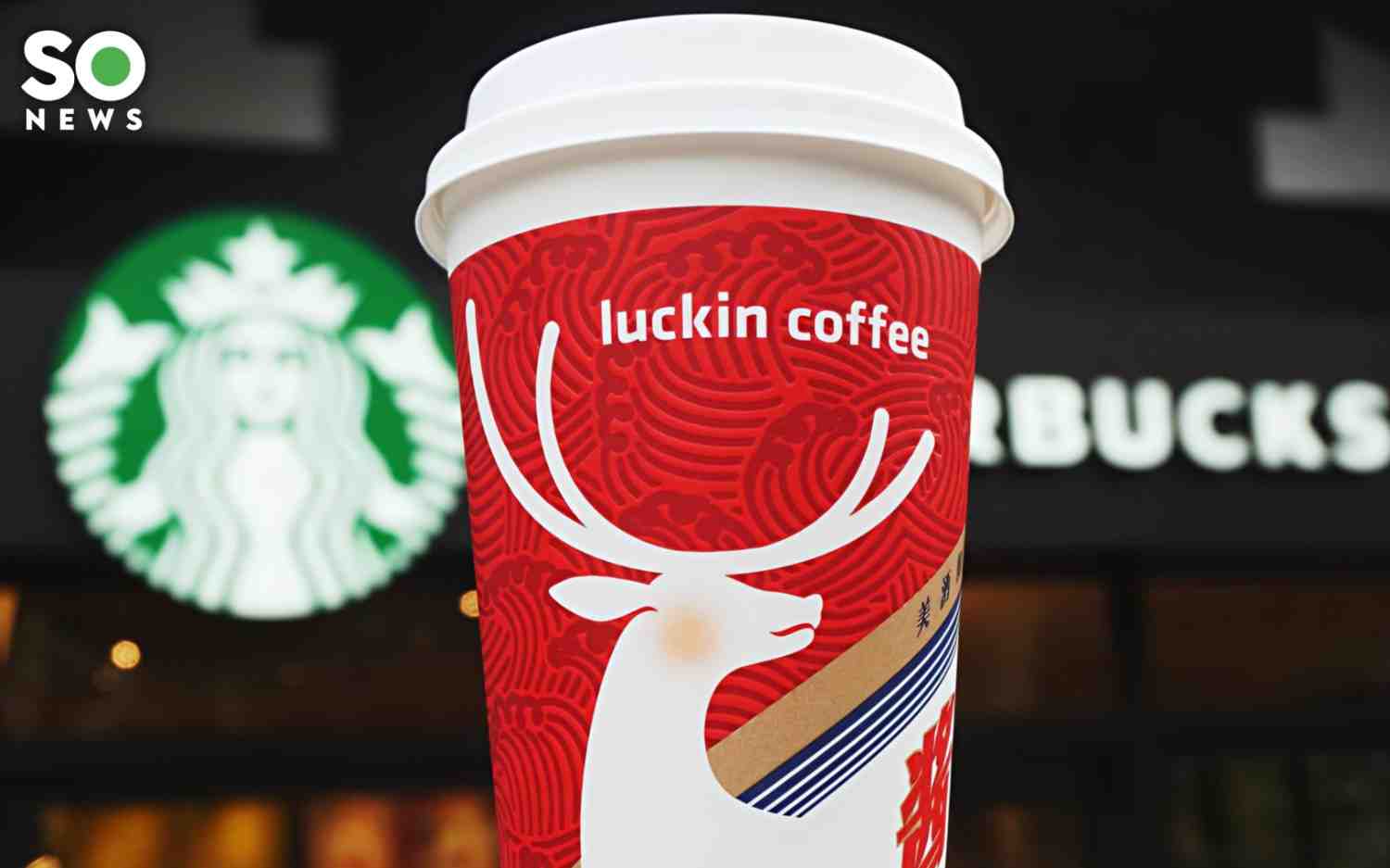
Chinese coffee chain Luckin Coffee has crossed a major milestone by opening its 30,000th store, underscoring its rapid expansion in China, even as global rival Starbucks faces slowing growth and mounting challenges in the world’s second-largest economy. The contrast highlights a shift in consumer preferences and competitive dynamics in China’s highly contested coffee market.
Luckin’s Rapid Expansion Continues
Luckin Coffee’s 30,000th outlet marks one of the fastest retail expansions in the global food and beverage sector. The company has aggressively grown its footprint across large cities as well as smaller urban centres, relying on a tech-driven, delivery-first model and frequent product innovation.
Its strategy focuses on affordability, convenience, and digital engagement. By leveraging app-based ordering, heavy discounting, and rapid store rollouts, Luckin has positioned itself as a mass-market brand that appeals strongly to younger, price-sensitive consumers.
Starbucks Struggles in a Changing Market
In contrast, Starbucks has been facing headwinds in China, a market it once viewed as its most important growth engine outside the United States. Slower store traffic, rising competition from domestic brands, and cautious consumer spending have weighed on its performance.
While Starbucks continues to expand selectively, its premium pricing and café-centric experience are under pressure as local players offer cheaper, faster, and more digitally integrated alternatives. Analysts say Starbucks is increasingly being forced to rethink its strategy to remain competitive.
Shifting Consumer Preferences
China’s coffee consumers have evolved rapidly over the past decade. What was once a niche, aspirational beverage has become a daily habit for millions, driving demand for convenience and value over traditional café experiences.
Luckin has capitalised on this shift by focusing on takeaway and delivery formats, smaller store sizes, and data-driven product launches tailored to local tastes. Starbucks, meanwhile, has traditionally emphasised in-store ambience and premium positioning, which is proving harder to scale in the current environment.
Competitive Landscape Intensifies
The Chinese coffee market has become intensely competitive, with multiple domestic chains expanding alongside Luckin. Price wars, promotional campaigns, and rapid innovation have become the norm, putting pressure on margins across the industry.
Luckin’s ability to scale quickly while maintaining cost efficiency has been a key factor in its growth. Its local supply chain, digital-first operations, and familiarity with Chinese consumer behaviour give it an advantage over international rivals.
Implications for Global Coffee Brands
The diverging fortunes of Luckin and Starbucks illustrate how global brands must adapt to local market realities. China’s size and speed of change mean that strategies successful elsewhere may not translate directly.
For Starbucks, the challenge will be to balance its premium identity with the need for localisation and digital agility. For Luckin, sustaining profitability and managing operational complexity at such scale will be critical in the years ahead.
Looking Ahead
Luckin Coffee’s 30,000-store milestone signals its ambition to dominate China’s coffee market, while Starbucks’ struggles reflect the difficulties foreign brands face in a rapidly evolving landscape.
As competition intensifies, the battle for China’s coffee drinkers is likely to shape global strategies for both domestic champions and international players, making the market a key testing ground for the future of the coffee industry.