Startup Originals Team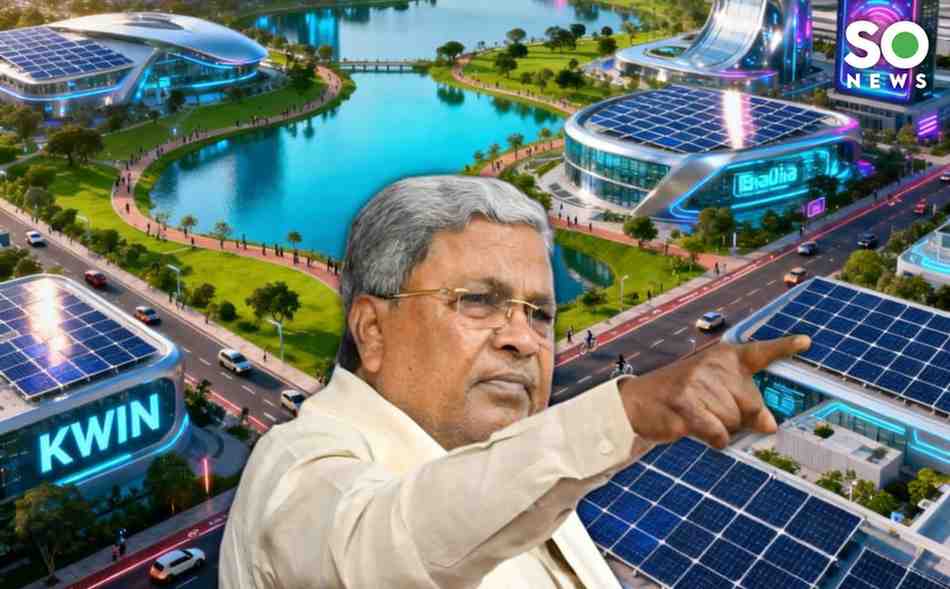
The Government of Karnataka has unveiled an ambitious new urban development, KWIN City (Knowledge-Wellbeing-Innovation City), spanning 5,800 acres between Dabaspet and Doddaballapur, just 45 minutes from Bengaluru’s Kempegowda International Airport. With an estimated investment of about ₹40,000 crore, KWIN City is poised to become a global-class hub for education, healthcare, technology and sustainable urban living.
Strategic Location & Scale:
KWIN City is strategically located in Bengaluru Rural district, between Dabaspet and Doddaballapur, around 45 minutes from the airport. The 5,800-acre site is designed to host a new-age city with advanced infrastructure, creating a sustainable high-tech ecosystem viably separate from, but closely connected to, Bengaluru. On completion, it is expected to generate over 100,000 high-tech jobs for the region.
Education & Healthcare: Building Global Hubs
A key ambition for KWIN City is to attract the world’s top educational institutions. The vision includes inviting the top 500 foreign universities to establish campuses under UGC-regulated norms, setting the stage for industry-academia collaboration and elevating Karnataka’s place in global education.
Simultaneously, the city will host a Life Sciences Park aimed at becoming Asia’s leading academic-medical hub. Major national and international hospitals, medical R&D centres and allied healthcare services will anchor this component.
Innovation Districts & Sunrise Sectors:
Within KWIN City, a dedicated Innovation District will cater to emerging “sunrise” sectors including:
- Life Sciences
- Future Mobility & Electric Vehicles
- Semiconductors & Advanced Materials
- Advanced Manufacturing
- Aerospace, Defence & Space Technology
These zones are designed to foster deep-tech development, R&D collaborations and startup ecosystems in a purpose-built environment.
Sustainable Infrastructure & City Design:
KWIN City is designed with sustainability at its core:
- Around 70% of water demand will be met via rainwater harvesting, groundwater recharge and a connected network of lakes, tanks and reservoirs.
- Approximately 45% of the land is earmarked for open spaces: parks, lakes and water bodies.
- The entire city’s power needs will be initially met through a solar grid spanning about 485 acres, with plans to transition to cleaner energy sources over time.
- Transport infrastructure follows the “15-minute city” model: residents will have access to most daily needs via monorail, electric buses, pedestrian and bicycle lanes, reducing reliance on private vehicles.
Economic & Urban Impact:
By integrating knowledge, wellness and innovation in one location, KWIN City aims to serve as a parallel city to Bengaluru, offering high-quality urban living, global education and cutting-edge industry. The project is projected to create more than 100,000 high-tech jobs, reinforcing Karnataka’s push toward a future-ready economy.
Infrastructure planning includes smart roads, metro and suburban rail extensions and an internal network of public and rapid transit systems to ensure seamless connectivity.
What Lies Ahead:
Phase 1 of KWIN City’s infrastructure development has begun and is expected to be completed by December 2026, according to the state’s Industries Minister M. B. Patil. Key next steps include formalising anchor investment commitments, onboarding global universities, building health-science partnerships and executing the first tranche of built-up zones for education and innovation.
KWIN City represents a transformative vision, not just for Karnataka, but for India’s urban, educational and innovation landscape. Its success will depend on execution, timely investment and the ability to attract global players in higher education, healthcare and deep tech. If these align, KWIN could set a new benchmark for twenty-first-century city building.