Startup Originals Team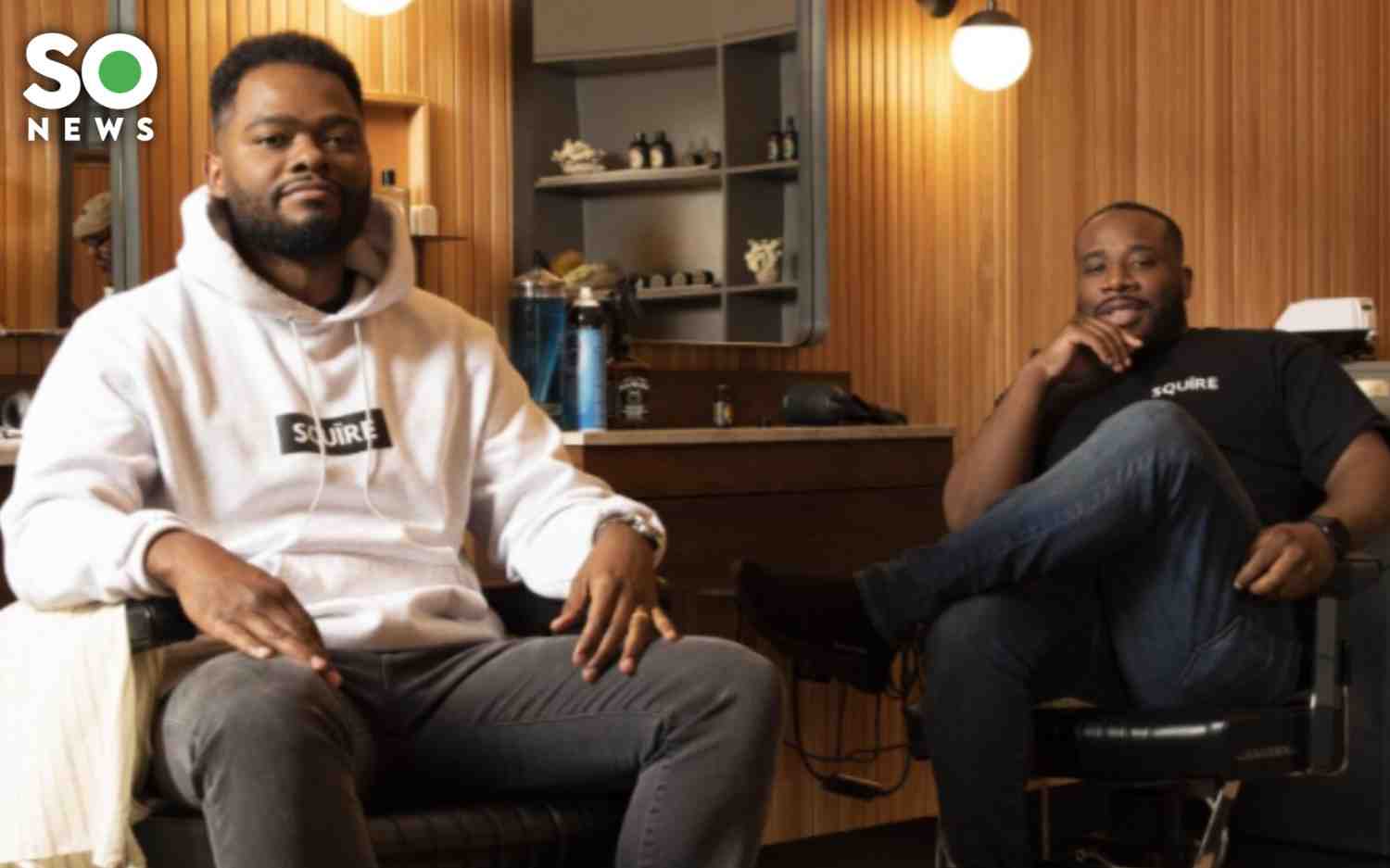
Squire, a SaaS platform for barbershop owners, has reimagined a decades-old experience: booking, payments, and shop management for haircuts and grooming. Built by two former professionals who grew up with weekly barber visits in New York, the company is now worth millions, serves shops across multiple countries, and shows how deep insider understanding can disrupt even the most traditional industries.
From Childhood Barber Chairs to Professional Careers:
Songe LaRon and Dave Salvant both grew up in New York City, accustomed to weekly or regular trips to barbershops from early childhood. These visits, part ritual, part community gathering, left them with a simple yet powerful insight: even as technology changed everywhere else, the barbershop experience remained stuck in time.
After working in banking and law respectively, both felt drawn to entrepreneurship. But one realization stood out: “You can hail a rideshare from your phone, order food or groceries, but scheduling a haircut still meant calling a barber, waiting in line for hours, and paying cash,” Salvant recalled. This disconnect between modern consumer habits and outdated service delivery became the spark for Squire.
The Idea: Uber for Barbers, and More
The original Squire concept was a customer-facing app for booking barber appointments, essentially “the Uber of barbers.” The goal: make booking, scheduling and paying for haircuts as seamless as any modern on-demand service.
LaRon reflected: “We knew this industry intimately, we grew up in it, we experienced it firsthand. Others missed its potential; we didn’t.” Despite their conviction, initial attempts at direct consumer adoption did not gain much traction. Early feedback gathering (door-to-door outreach, popup barbershop experiments) revealed one hard truth: the existing process didn’t just frustrate customers, it also burdened barbers and shop owners.
Learning by Doing: Buying a Barbershop, Facing Realities
In 2016, LaRon and Salvant made a bold move: they purchased a barbershop. They invested over half their available funds into the acquisition, calling it a “bet-the-company” decision. The objective: to intimately understand the operational and business-side challenges of running a barbershop.
What they learned was crucial: barbershop owners had their own pain points, managing appointments, tracking individual barber commissions, handling messy cash transactions, juggling inventory, and balancing customer flow. The founders realized that their original B2C model was incomplete, the real pain point that needed solving was on the business side.
Pivot to B2B SaaS: Building a Platform for Shop Owners
With fresh insight, Squire pivoted from a consumer app to a business-facing SaaS platform aimed at barbershop owners and operators. The new platform offered:
- Digital booking & scheduling
- Point-of-sale (POS) and cashless payment handling
- Barber commission tracking and payout features
- Inventory & supply management
- Customer relationship management
This shift leveraged their insider understanding and solved deep-rooted operational inefficiencies. As Harvard Business School Senior Lecturer Jeffrey Bussgang pointed out, while the initial consumer-focused version didn’t succeed, the pivot redefined their value proposition, focusing on what barbershop owners needed most.
Growth & Success: From One Shop to Global Reach
The B2B SaaS model struck a chord. Barbershop owners, long underserved by technology, began adopting Squire’s tools to modernize and scale their businesses. Over time, Squire grew from a single shop tool to a platform used by many salons and barbershops across multiple countries.
Today, Squire has raised around $165 million in funding and continues to expand its footprint. Its success highlights the potential of niche vertical SaaS platforms, especially when founders come from the target industry and deeply understand unaddressed pain points.
Why Squire’s Story Matters: Key Takeaways for Entrepreneurs
- Insider insight matters: Growing up familiar with the pain points gave the founders empathy and vision that external observers lacked.
- Be ready to pivot: Their bold shift from B2C to B2B was painful but necessary, and it unlocked scale.
- Solve real problems for businesses, not just consumers: Real value often lies in enabling businesses to operate more efficiently.
- Start small, learn deeply: Buying and running a barbershop themselves gave them real-world lessons that fueled better product-market fit.
- Niche verticals have huge potential: Industries long ignored by tech – like grooming, can be ripe for disruption with the right solution.
Conclusion:
Squire’s journey, from two founders who remembered childhood barber visits to a globally recognized SaaS platform, is a testament to the power of domain knowledge, humility to learn, and courage to pivot. In an industry many considered traditional and unchangeable, Squire showed that with the right focus and empathy, even barbershops can join the digital revolution.