Startup Originals Team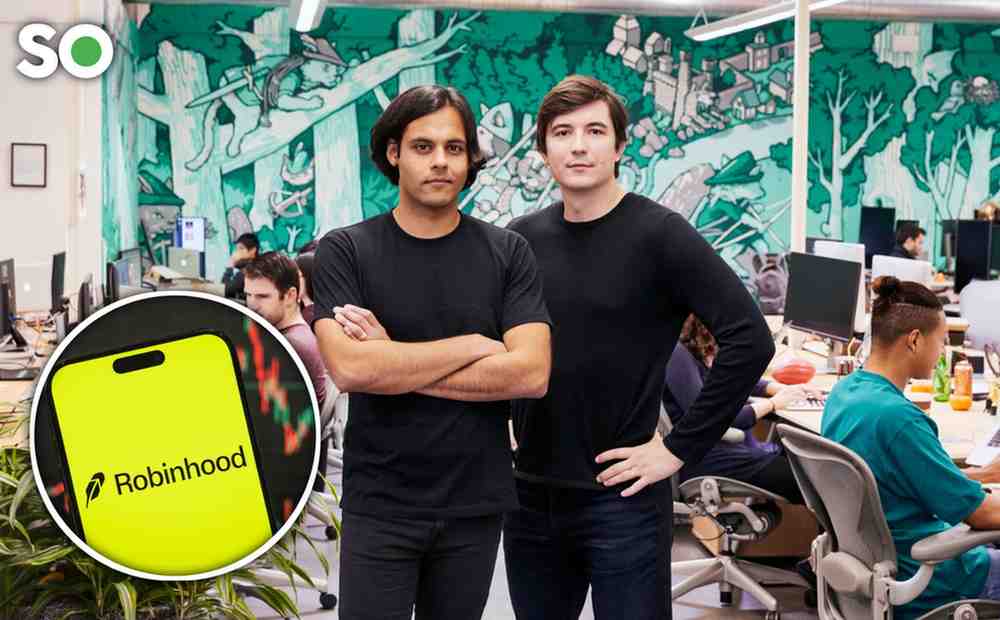
In just a few years, Robinhood transformed the way millions of people invest. By eliminating trading commissions and putting stock markets on smartphones, the fintech startup broke long-standing barriers around wealth creation and forced an entire industry to change its rules.
The Idea That Challenged Wall Street (2013)
Robinhood was founded in 2013 by Vlad Tenev and Baiju Bhatt, two Stanford graduates with deep backgrounds in mathematics and finance. They identified a fundamental problem in investing: traditional brokerages charged high commissions, markets felt intimidating, and young people were effectively locked out.
Their idea was simple yet radical for its time, allow anyone to trade stocks for free through an easy-to-use mobile app. Many believed commission-free trading was impossible, but the founders saw technology as the equaliser.
A Mobile-First Launch That Went Viral (2014–2015)
Robinhood launched as a mobile-first platform with a clean interface, instant account setup, and zero commission trades. The simplicity resonated instantly with millennials and first-time investors. Growth was driven by word of mouth and a viral waitlist, as curiosity around “free trading” spread rapidly.
Instead of charging commissions, Robinhood adopted a different revenue model through payment for order flow (PFOF), allowing it to keep trading free for users.
Rapid Growth and Industry Disruption (2016–2019)
Between 2016 and 2019, Robinhood didn’t just grow – it changed investing behaviour. Millions of new retail investors entered the stock market for the first time. Trading began to feel as intuitive as using a social app.
By 2019, Robinhood had crossed 10 million users. Its impact was so significant that legacy brokerages like Charles Schwab and TD Ameritrade were forced to slash trading fees to zero, ending decades of commission-based trading across the industry.
The GameStop Moment and Global Spotlight (2021)
Robinhood became a household name during the 2021 GameStop trading frenzy. Massive retail participation pushed the app to its limits. When Robinhood temporarily restricted trading due to clearing and capital requirements, it faced intense backlash from users, regulators, and politicians.
The episode exposed the challenges of scaling fast in a highly regulated financial system and highlighted the complexity behind seemingly simple “free” platforms.
IPO and the Shift Toward Maturity (2021 Onwards)
In July 2021, Robinhood went public with a valuation exceeding $30 billion. The IPO marked its transition from disruptive startup to established fintech company. Post-listing, the company shifted focus toward stronger risk management, regulatory compliance, and expanding its product suite to include crypto trading, retirement accounts, and long-term investing tools.
Why Robinhood’s Story Matters
Robinhood succeeded because it removed friction from investing, designed for beginners rather than professionals, and leveraged mobile technology to unlock a new market. While controversial at times, even critics acknowledge its lasting impact – it democratised market access and permanently reshaped how the world trades.
The Legacy of a Fintech Revolution
Robinhood’s journey proves that rethinking pricing, design, and accessibility can disrupt even the most entrenched industries. From a bold student idea to a platform that forced Wall Street to adapt, Robinhood didn’t just build an app, it changed the rules of investing forever.