Startup Originals Team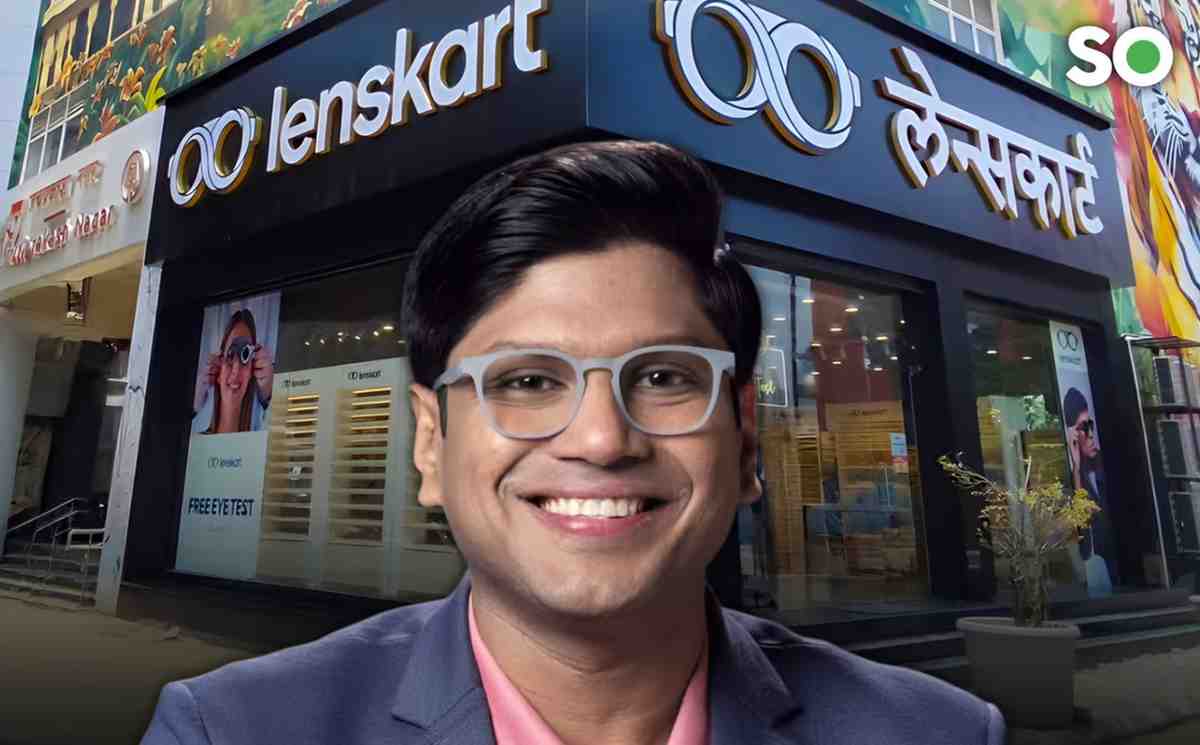
What began in 2010 as a small idea to make stylish and affordable eyewear accessible to everyone in India has evolved into one of the country’s most iconic consumer brands. Founded by Peyush Bansal along with Amit Chaudhary and Sumeet Kapahi, Lenskart set out to disrupt a fragmented, overpriced eyewear market, and over the years, it has grown into a global omnichannel player valued at about ₹70,000 crore (US$8.4 billion).
Identifying the Market Gap
Bansal, an alumnus of IIM Bangalore and a former Microsoft employee, recognised early on that India’s eyewear market was deeply unorganised, lacked variety and offered poor customer convenience. According to multiple sources, Lenskart was founded with the mission to address this gap.
The company’s founders saw an opportunity to build a vertically-integrated model, from design and manufacturing to distribution—rather than follow the traditional retail chain.
Leveraging Technology and Omnichannel Strategy
From the outset, Lenskart embraced technology as a core differentiator. The company introduced AI-powered virtual try-ons, home-eye-check services and a highly automated manufacturing system to enable precision and efficiency. As stated in company-info, Lenskart serves millions of people via its online platform and rapidly expanding retail network.
Simultaneously, Lenskart built an omnichannel model, blending a strong online presence with physical stores. This approach helped build customer trust, particularly in a segment where people often preferred to try before buying. The presence of offline stores helped alleviate hesitation about online eyewear purchases in India.
Growth Trajectory and Global Expansion
Over the years, Lenskart has scaled rapidly. According to third-party summaries:
- The company now operates thousands of retail stores in India and abroad.
- It attracted major global investors including SoftBank, KKR and Temasek, enabling its expansion and business scaling.
- Rather than chasing only valuations, Lenskart focused on strengthening operations, improving customer experience, investing in manufacturing and logistics, thereby balancing growth with sustainability.
Key Lessons from the Lenskart Journey
- Solve a real problem – The founders identified an underserved need: affordable, accessible eyewear in India.
- Technology as enabler – Using virtual try-ons, home eye-checks and automated supply chains gave Lenskart a competitive edge.
- Build trust via omnichannel – Online convenience plus offline physical stores helped overcome consumer hesitation and built credibility.
- Strategic, not just rapid, growth – Growth was paired with process, manufacturing strength and customer focus rather than pure expansion.
- Customer-first mindset – From offering affordable frames to convenient home-services, Lenskart kept customer value at the centre.
The Road Ahead
As Lenskart prepares for what is likely one of India’s largest consumer-tech IPOs (opening 31 October 2025) with a targeted valuation of ~₹70,000 crore, all eyes are on how it will maintain momentum, expand internationally and continue to innovate. Early investors are reportedly eyeing 5× to 17× potential gains.
For entrepreneurs, Lenskart’s story is a masterclass in turning a simple idea into a category-defining enterprise, proof that with vision, execution and consistency, even overcrowded markets can be transformed.