Startup Originals Team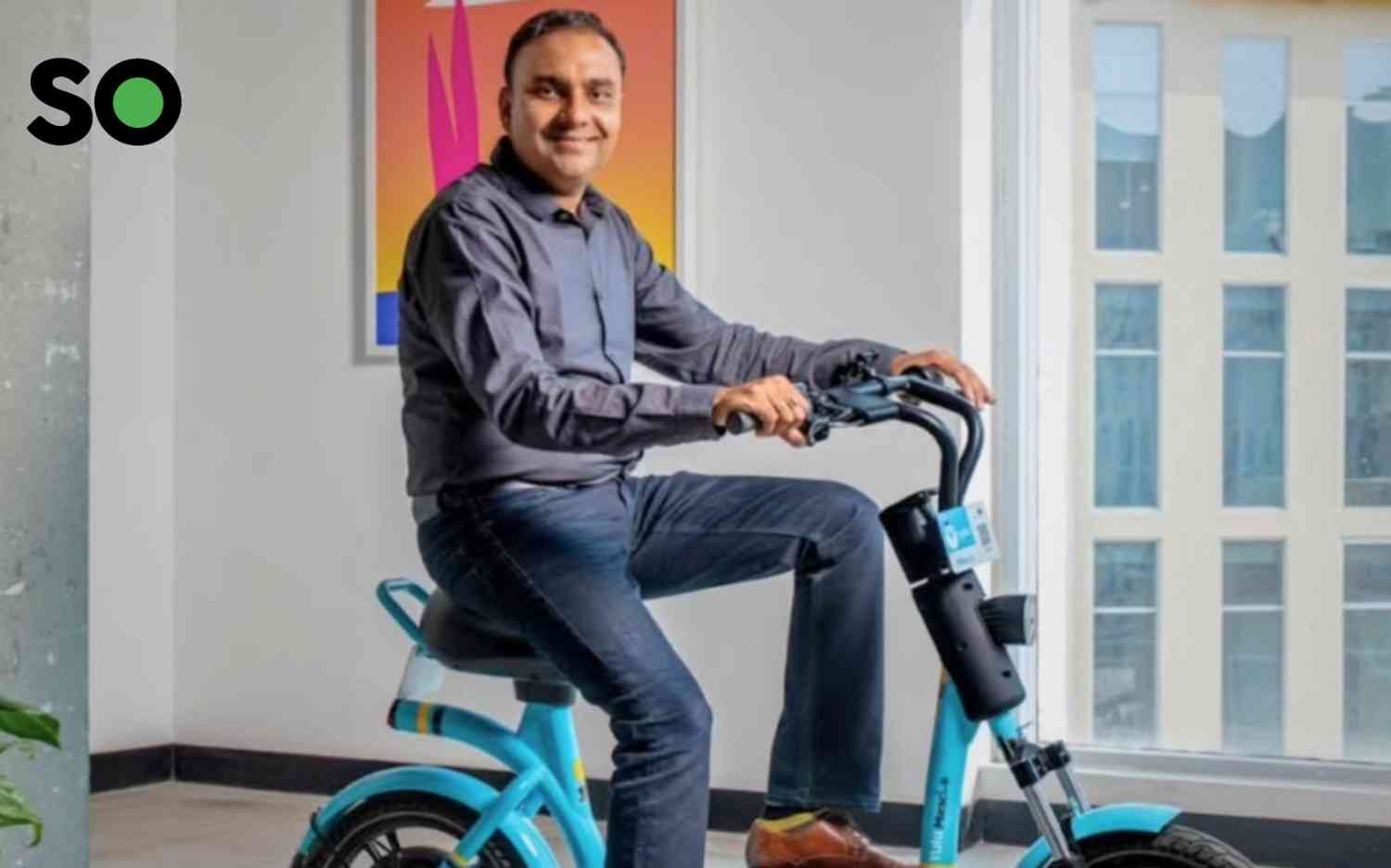
In India’s crowded cities, short distance travel has always been a challenge. Traffic congestion, pollution, and the lack of efficient last mile connectivity created a huge mobility gap. To solve this problem, Yulu was founded with a simple mission: make urban commuting cleaner, smarter, and more accessible.
What began as a small electric mobility experiment in Bengaluru has today evolved into one of India’s leading shared electric mobility platforms, nearly doubling its revenue to ₹242 crore in FY25 from ₹126 crore in FY24.
The Founding Vision
Yulu was founded in 2017 by mobility entrepreneur Amit Gupta along with co-founders Hemant Gupta, Naveen Dachuri, and Rajiv Tamhane. The founders believed that large cities needed a sustainable alternative for short distance travel.
Instead of building another ride hailing platform, they focused on micro mobility, introducing lightweight electric two wheelers that could be rented for short trips through a mobile app. The idea was to reduce congestion while making commuting affordable and environmentally friendly.
Building a Micro Mobility Ecosystem
Yulu’s model revolves around shared electric vehicles placed strategically across cities. Users can unlock these vehicles through the app, ride them to their destination, and drop them at designated zones.
The company introduced vehicles such as Yulu Miracle and Yulu DeX, designed specifically for urban use and last mile logistics.
Yulu DeX, in particular, became popular with delivery partners working for food and e commerce companies. This allowed the startup to expand beyond individual commuters into the fast growing delivery and logistics mobility market.
Strategic Partnerships and Expansion
One of the major growth drivers for Yulu was its strategic partnership with Bajaj Auto, which invested in the company and supported the development of electric vehicles and infrastructure.
This collaboration helped Yulu scale its fleet, strengthen manufacturing capabilities, and improve operational efficiency.
The company gradually expanded its services to multiple cities including Bengaluru, Mumbai, Delhi, and other urban hubs where last mile mobility demand is high.
Strong Revenue Growth
Yulu’s growth strategy has started delivering results. In FY25, the company reported ₹242 crore in revenue, nearly doubling from ₹126 crore in FY24.
This strong financial performance reflects the increasing adoption of shared electric mobility and the company’s growing presence in the delivery and logistics ecosystem.
As urban mobility continues to shift toward electric and sustainable alternatives, Yulu’s model is gaining traction among both consumers and businesses.
Driving Sustainable Urban Mobility
Beyond revenue growth, Yulu’s mission focuses on sustainability. By replacing petrol powered short trips with electric mobility, the company contributes to reducing urban carbon emissions and improving air quality.
Its electric fleet also reduces the cost of transportation for gig workers and delivery partners, making it both an environmental and economic solution.
Conclusion
Yulu’s journey from a startup idea to a rapidly scaling mobility platform highlights how innovation can address real urban challenges. By focusing on micro mobility, strategic partnerships, and sustainable transportation, the company has built a strong foundation in India’s electric mobility ecosystem.
With rising adoption of EVs and increasing demand for last mile connectivity, Yulu is positioning itself as a key player in shaping the future of urban transportation in India.