Startup Originals Team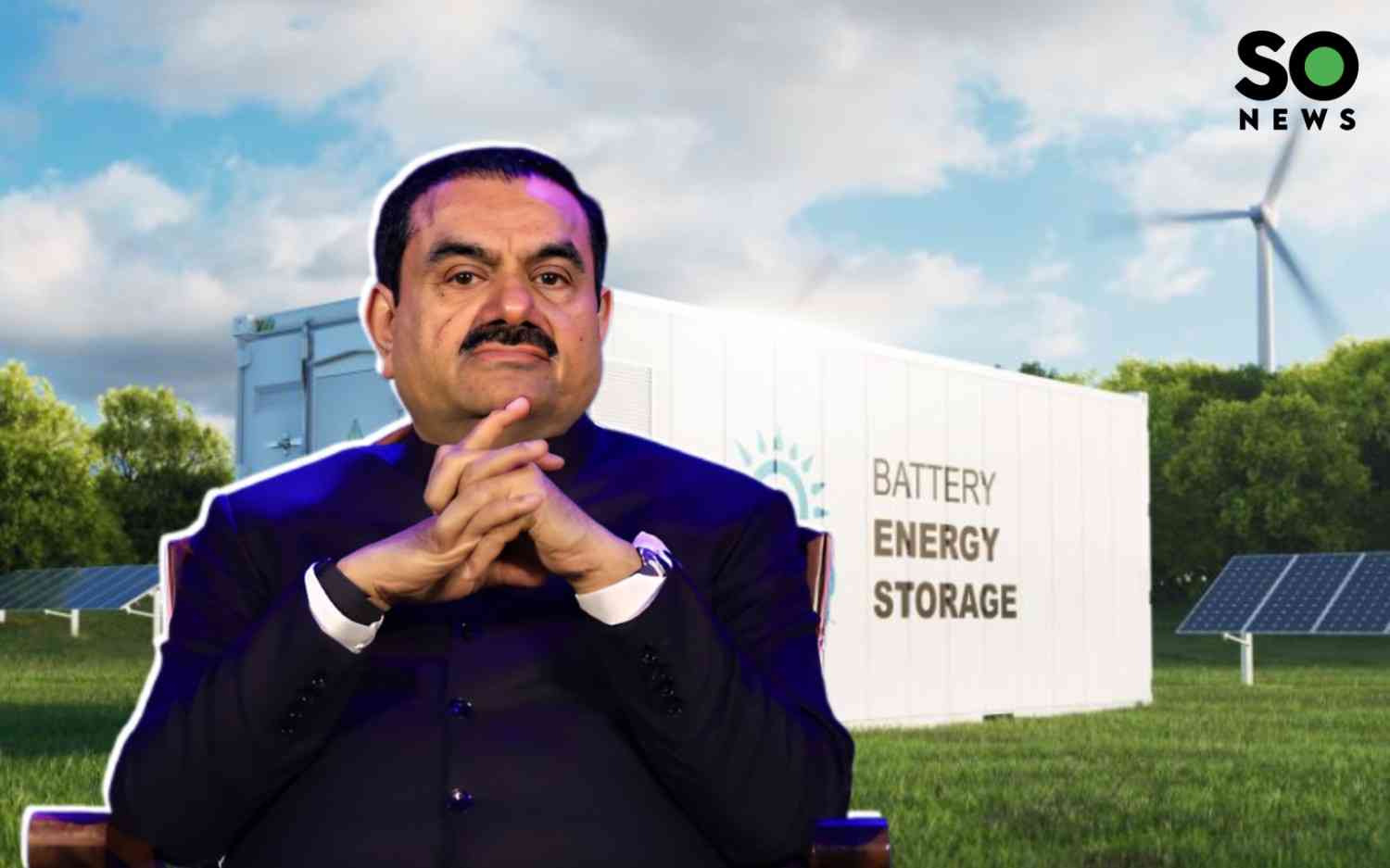
Adani Group has announced an ambitious battery-energy storage system (BESS) project in Gujarat’s Khavda region, a mammoth 1,126 MW installation (with an energy capacity of 3,530 MWh) that could cost up to ₹10,000 crore and is scheduled for commissioning by March 2026.
This development marks a major leap forward in India’s transition to a renewable-energy future, positioning this facility not only as the largest BESS project in the country but also among the largest single-location installations globally.
Project Overview:
- The BESS project will be located at the Khavda site in Gujarat, which already hosts one of the world’s largest renewable-energy parks.
- It features a power output of 1,126 MW and an energy storage capacity of 3,530 MWh, effectively storing enough power to deliver 1,126 MW for about three hours.
- The deployment will involve more than 700 battery containers and advanced lithium-ion battery technology, integrated with an intelligent energy-management system.
- While the Adani Group has not officially confirmed the exact investment, industry estimates peg the cost at approximately ₹10,000 crore based on typical per-MWh costs (₹2.20-2.40 crore/MWh for the 2023-26 period).
Strategic Importance & Benefits:
- Grid Stability & Renewable Integration: By enabling storage of 3,530 MWh of energy, the project will smooth out fluctuations from solar and wind generation, reduce solar curtailment, manage peak demand, and support 24/7 power supply from renewables.
- India’s Energy Transition: The project signals India’s commitment to building large-scale storage infrastructure, which is central to achieving its target of 500 GW of clean-energy capacity by 2030.
- Global Benchmark: With one of the largest single-location BESS setups globally, the Adani Group is setting a benchmark for the industry, both in India and internationally.
Roadmap & Scale:
- The project is targeted for commissioning by March 2026, with work already in advanced stages.
- Beyond this flagship project, the Adani Group plans to expand its storage footprint to 15 GWh by March 2027, and 50 GWh within five years, building a major storage ecosystem.
Challenges & Considerations:
- Cost & Execution: Although estimates suggest up to ₹10,000 crore, actual investment and cost-control will matter. Battery-manufacturing costs, logistics, and technology integration will all affect the economics.
- Technology & Maintenance: Running a large-scale BESS requires high reliability, efficient cooling/management systems, safe disposal/recycling of batteries and robust EPC execution.
- Regulatory & Infrastructure Linkages: The project’s success depends on transmission infrastructure, grid-connectivity, regulatory approvals and incentives for storage deployment in India.
- Scalability & Long-Term ROI: While the headline is impressive, achieving strong operational performance, delivering expected returns and delivering value to stakeholders will be vital.
Why It Matters for India & the Clean-Energy Landscape:
- It accelerates India’s move from “intermittent renewables” toward “round-the-clock renewables + storage”, a critical shift for carbon-and-energy goals.
- It underscores private-sector leadership in large-scale storage, beyond just solar/wind generation, emphasising the storage dimension of the energy transition.
- It boosts Gujarat’s role as a clean-energy hub and enhances India’s position on the global clean-tech map.
- It sets a template for subsequent storage projects in India and abroad, possibly catalysing storage-economies of scale and supply-chain maturity.
Final Take-away:
The Adani Group’s 1,126 MW / 3,530 MWh battery-storage project in Gujarat marks one of the most ambitious clean-energy infrastructure moves in India to date. With an estimated cost of up to ₹10,000 crore and a commissioning target of March 2026, the facility promises to reshape power-grid dynamics, accelerate renewable-integration and set new benchmarks in battery-energy storage. For India’s energy transition, the moment is significant, it moves from renewable generation toward renewable reliability.