Startup Originals Team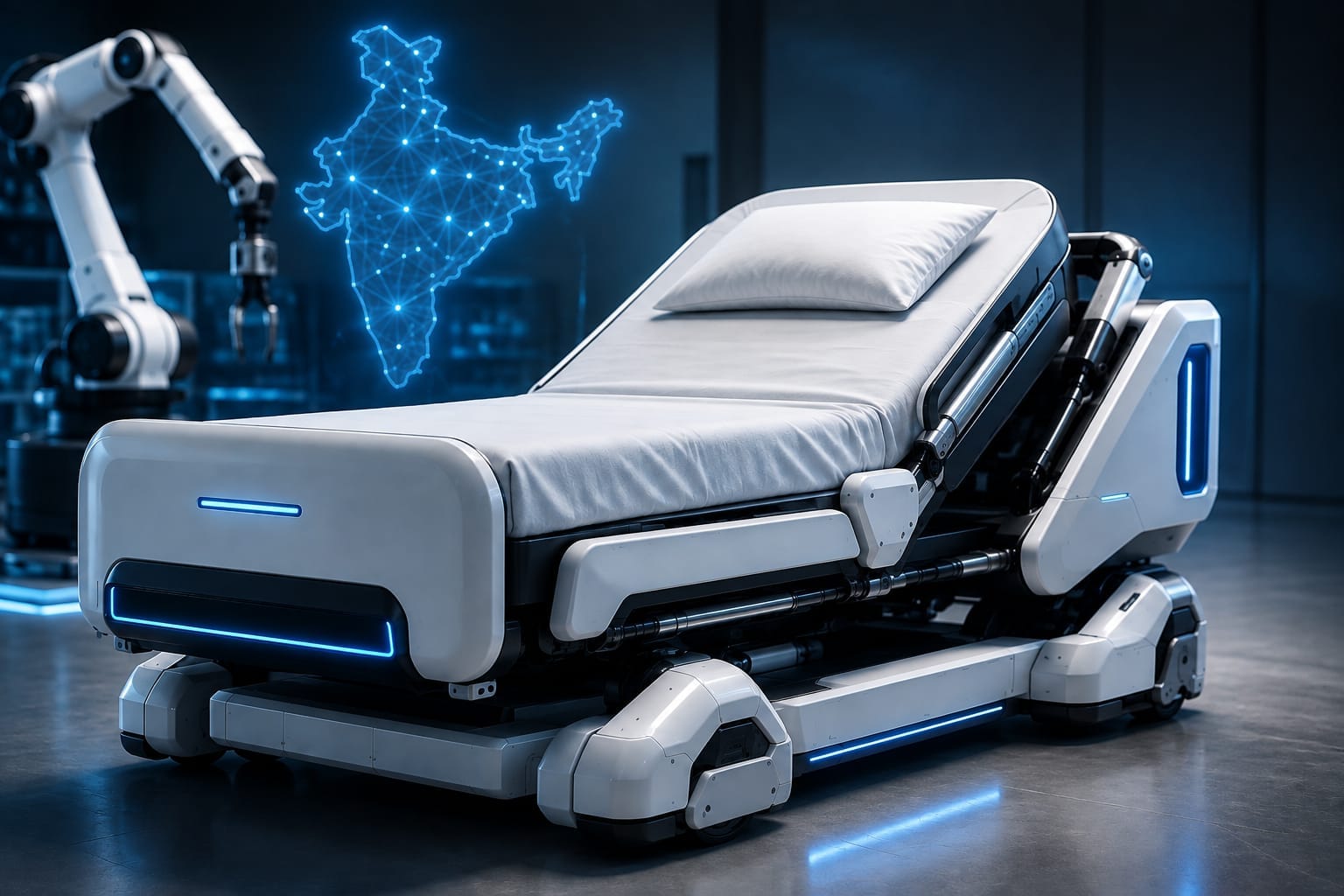
Hyderabad-based physical AI startup WATER Robotics has raised $2.5 million (around ₹24 crore) in a fresh funding round led by early-stage venture capital firm Endiya Partners. The round also saw participation from India’s national badminton coach Pullela Gopichand, Darwinbox cofounder Rohit Chennamaneni, Swiggy cofounder Nandan Reddy, and other angel investors.
The startup is developing technology that allows physical surfaces to sense human interaction and respond to it in real time. Its flagship product, CAMA, is a robotic bed designed to adjust according to the user’s posture and physical needs.
The fundraise comes as investors increasingly look at Physical AI, a segment focused on bringing artificial intelligence into machines and physical environments. WATER Robotics is using the new capital to strengthen its research and development capabilities, improve technical validation and collect more data for its AI systems.
What Happened?
WATER Robotics has secured $2.5 million in seed funding from a group of institutional and angel investors, with Endiya Partners leading the round.
According to the company, most of the fresh capital will be directed towards strengthening its R&D capabilities, while a portion will be used for data collection. The funding is expected to help the startup validate the technology behind its adaptive surfaces and improve the intelligence layer powering its products.
WATER Robotics is building its technology around the idea that everyday surfaces should not remain static. Instead, they can use sensors, artificial intelligence and physical actuation to understand how people interact with them and respond accordingly.
The company currently has two key products in development — CAMA, a robotic bed, and FLOW, an intelligent robotic chair. Both products are being developed as applications of the company’s broader physical AI technology.
Key Details
CAMA is designed to continuously understand the position of a person on the bed and adjust its support. Publicly available information about the product indicates that it incorporates 10,752 pressure sensors and 42 actuators, allowing it to build a detailed pressure map and make physical adjustments based on the user’s position.
The system is intended to recognise different body positions and respond through small physical changes. The objective is to make the surface adapt to the person rather than forcing the person to adjust to a fixed mattress structure.
WATER Robotics has also developed its own AI systems for the product. Information shared by the company indicates that CAMA uses multiple machine-learning models to process sensing data and determine how the bed should respond. Some of these systems operate locally, reducing the need to depend entirely on cloud-based computing.
The startup’s broader technology platform is called VORTEX, which focuses on understanding how the human body interacts with the physical environment. WATER Robotics plans to use this technology beyond beds and chairs, with potential applications in sectors such as automotive and aviation.
The company also showcased CAMA at CES 2026 in Las Vegas, where it presented its approach to adaptive sleep technology and physical AI. Founder and CEO Teja Vinukollu has described the product as part of a wider effort to build intelligent physical surfaces.
Why This Matters
The WATER Robotics funding is significant because it highlights growing investor interest in Physical AI, an area that goes beyond software-based artificial intelligence.
While much of the AI industry has focused on language models, image generation and software agents, Physical AI aims to make machines capable of sensing and responding to the real world.
WATER Robotics is applying that concept to furniture, beginning with products that directly interact with the human body. A robotic bed can provide the company with a controlled environment to develop sensing, decision-making and actuation technologies before taking those capabilities into other physical environments.
The approach could also create a new category of intelligent furniture in which products continuously respond to individual users rather than offering a fixed design for everyone.
Company Background
WATER Robotics was founded in 2024 by Teja Vinukollu and Haneesh Mourya Desu and is based in Hyderabad. Vinukollu has a background that includes experience at companies such as Microsoft, while Desu brings experience related to furniture supply chains and manufacturing.
The startup is focused on developing physical AI systems that combine hardware, sensing, software and mechanical movement. Instead of treating furniture as passive objects, the company wants its products to understand the physical environment and respond dynamically.
CAMA is currently the company’s most visible product. FLOW, its robotic chair, represents another application of the same underlying technology, with a focus on posture, movement and seated interaction.
WATER Robotics has also been working on its technology and hardware stack internally, including efforts to improve the mechanical and electronic components required for responsive surfaces.
Industry Impact
The funding could strengthen India’s emerging position in deeptech, robotics and Physical AI by giving a hardware-focused startup more capital to develop proprietary technology.
Building physical AI products is generally more complex than developing software because companies need to combine artificial intelligence with sensors, mechanical systems, electronics, manufacturing and safety controls.
For customers, the development of adaptive furniture could eventually lead to products that respond more closely to individual body positions and activities. However, WATER Robotics remains in the product development and validation stage, meaning the commercial scale of these applications is yet to be established.
The company’s focus on collecting real-world physical interaction data is also important. Unlike text and image data, detailed datasets describing how human bodies interact with furniture are less readily available, making proprietary data collection a key part of developing such systems.
The broader Indian Physical AI ecosystem is also attracting funding. Recent investments in robotics and autonomous systems indicate growing interest among investors in startups developing AI-enabled machines rather than software-only products.
Future Plans
WATER Robotics plans to use the new $2.5 million funding primarily for R&D, technical validation and data collection. The company is expected to focus on improving the intelligence behind its adaptive surfaces before expanding the technology into additional applications.
The startup’s longer-term vision goes beyond the CAMA bed and FLOW chair. It is exploring how its physical AI technology could be applied to other environments, including automotive and aviation, where surfaces and systems could potentially respond to individual users.
For now, the priority remains proving that the technology can reliably sense, understand and respond to human interaction. The success of that effort could determine whether WATER Robotics can take its adaptive-surface technology from an experimental product category into a broader physical AI platform.
Conclusion
The WATER Robotics funding marks another notable investment in India’s growing Physical AI ecosystem. With $2.5 million raised from Endiya Partners and prominent angel investors, the Hyderabad startup now has additional capital to strengthen its R&D, gather data and validate its adaptive-surface technology.
Its CAMA robotic bed gives the company a tangible starting point for a much broader ambition: creating physical products that can sense people, understand their needs and adapt in real time. If WATER Robotics can successfully scale this technology beyond beds and chairs, it could become an important Indian player in the emerging Physical AI market.