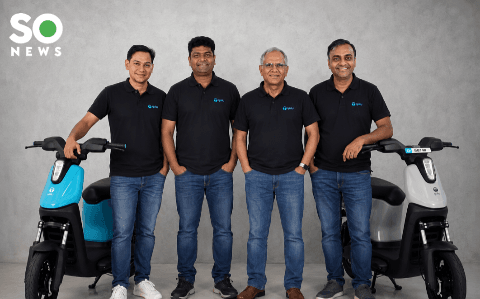
Startup Originals Team
Artificial intelligence is rapidly changing how businesses operate, but behind every AI model, application and chatbot sits an essential requirement: computing infrastructure.
That is the opportunity Mumbai-based Neysa identified when it was founded in 2023 by Sharad Sanghi and Anindya Das. Instead of competing to build another consumer-facing AI application, the company chose to focus on the infrastructure needed to develop and run AI workloads.
The strategy has helped Neysa move at remarkable speed. The company raised $20 million in seed funding in 2024, followed by a $30 million Series A later that year. In February 2026, Blackstone and co-investors entered into agreements that enabled a potential $1.2 billion capital raise, including up to $600 million of equity and a planned additional $600 million of debt financing.
Neysa now plans to use that capital to expand its infrastructure and deploy more than 20,000 GPUs in India, placing the startup at the centre of the country’s growing AI infrastructure race.
How Neysa Started With A Clear AI Infrastructure Bet
Neysa was founded at a time when generative AI was moving rapidly from research labs into businesses.
The founders recognised that companies adopting AI would need access to powerful GPUs, cloud infrastructure, networking, storage and software tools. Building all of this internally could require significant capital and technical expertise.
Neysa therefore built its business around providing AI acceleration infrastructure through the cloud.
Its flagship platform, Neysa Velocis, was launched in July 2024 and provides on-demand access to high-performance computing infrastructure. The company has positioned the platform to support workloads across the machine-learning lifecycle.
The approach gave Neysa a clear place in the AI value chain. Rather than building an AI model for consumers, it wanted to provide the infrastructure that businesses and institutions could use to build and deploy their own AI systems.
The Founder’s Previous Experience Became Neysa’s Advantage
One of Neysa’s biggest strengths came from the experience of its founder, Sharad Sanghi.
Before Neysa, Sanghi founded Netmagic, an Indian data-centre business that was later acquired by NTT. His experience in data centres, cloud infrastructure and enterprise technology gave him a strong understanding of the physical and technical infrastructure required to run large-scale computing businesses.
He later joined hands with Anindya Das, who became Neysa’s co-founder and CTO. The company’s founding team therefore combined experience in data-centre infrastructure with expertise in cloud and network technologies.
That background became important because AI infrastructure is not simply about buying GPUs. It requires data centres, networking, storage, software orchestration, security and reliable access to computing capacity.
Neysa entered the AI market with experience in several of those underlying infrastructure requirements.
The $20 Million Seed Round Gave Neysa Its First Push
Neysa’s first major funding milestone came in April 2024, when the company raised $20 million in seed funding.
The round was backed by Matrix Partners India, Nexus Venture Partners and NTT Venture Capital. The capital was intended to help Neysa expand its infrastructure and accelerate research and development.
The funding allowed the startup to move beyond its initial concept and begin building the infrastructure and technology required to serve enterprise AI customers.
For a young company operating in a capital-intensive sector, access to this early funding was particularly important because AI infrastructure requires substantial investment before companies can reach large-scale operations.
Neysa Velocis Became A Key Product
In July 2024, Neysa launched Neysa Velocis, its AI acceleration cloud platform.
The platform was designed to provide customers with on-demand access to high-performance computing infrastructure. By October, the company said Velocis had become generally available and that it had secured paying customers across several sectors.
These customers included AI-first digital companies, media and entertainment businesses, service providers, software companies and public-sector organisations.
The product gave Neysa a way to turn its infrastructure strategy into a commercial business.
Another $30 Million Arrived Within Months
Neysa did not take long to raise its next round.
In October 2024, the company announced a $30 million Series A, taking its disclosed funding across the two rounds to approximately $50 million.
The Series A was co-led by NTTVC, Z47 and Nexus Venture Partners, all existing investors in the company. Neysa said the capital would be used to scale infrastructure, increase R&D spending and expand its market presence.
The speed between the seed and Series A rounds showed that investors were willing to back the company’s infrastructure-focused AI strategy.
By that stage, Neysa was no longer simply developing an idea. It had launched Velocis and begun acquiring paying customers.
Neysa Expanded Beyond GPU Access
The company’s ambitions also extended beyond providing computing capacity.
Neysa began developing a broader AI infrastructure platform covering areas such as AI acceleration, machine-learning operations, observability and security.
This strategy is important because businesses adopting AI need more than GPUs. They also need tools to manage workloads, monitor infrastructure, protect data and operate AI systems reliably.
Neysa’s broader platform approach therefore aims to address several stages of enterprise AI adoption instead of focusing on computing capacity alone.
IndiaAI Mission Opened Another Major Opportunity
India’s push to develop domestic AI capabilities created another important opportunity for Neysa.
The company was selected as an approved cloud service provider under the IndiaAI Mission, bringing it closer to enterprises, startups, research institutions and government organisations looking for AI computing capacity.
The development was significant because India’s AI ambitions depend heavily on access to affordable and reliable computing infrastructure.
AI models require enormous amounts of computing power during training and deployment. As more Indian organisations move from experimenting with AI to using it in real business and government applications, demand for infrastructure is expected to rise.
That puts companies such as Neysa in an increasingly important position within India’s AI ecosystem.
The $1.2 Billion Capital Raise Changed The Scale Of The Story
Neysa’s biggest milestone came in February 2026.
Blackstone and co-investors entered into definitive agreements to invest in Neysa, enabling a $1.2 billion capital raise. The arrangement includes up to $600 million in equity capital, while Neysa intends to secure another $600 million in debt financing, subject to documentation.
The transaction represents a dramatic increase in the financial scale of Neysa’s expansion plans.
Blackstone is also partnering with Sanghi to accelerate the company’s growth. The investment is expected to support a major expansion of Neysa’s AI infrastructure within India.
The company plans to deploy more than 20,000 GPUs in India, potentially giving it a much larger role in the country’s AI computing ecosystem.
Why Neysa’s AI Infrastructure Strategy Matters
The AI industry is often dominated by stories about models and applications.
However, every AI model needs computing infrastructure.
Training and running advanced models requires GPUs and high-performance systems. Those systems require data centres, power, cooling, networking, storage and specialised software.
This creates a large infrastructure opportunity underneath the visible AI economy.
Neysa’s strategy is based on capturing part of that opportunity by giving businesses and institutions access to AI infrastructure without requiring them to build every component themselves.
The company is therefore targeting a problem that becomes more important as AI adoption increases.
Neysa’s Revenue Growth Shows Early Commercial Traction
Neysa’s business has also shown a sharp increase in revenue.
According to Inc42’s company data, Neysa reported revenue of ₹21.2 crore in FY25, compared with ₹13.9 lakh in FY24. That represents a very large year-on-year increase, although the company remained loss-making, reporting a net loss of ₹54.8 crore in FY25.
The numbers illustrate the nature of the company’s current stage.
Neysa has been investing heavily in infrastructure and expansion, while its revenue base has grown rapidly. For an infrastructure-heavy startup, building capacity ahead of demand can require significant upfront spending.
The challenge now is to turn that infrastructure expansion into sustainable long-term business growth.
Company Background: From Netmagic To Neysa
Neysa is headquartered in Mumbai and operates in AI acceleration cloud and enterprise technology.
The company was founded in 2023 by Sharad Sanghi and Anindya Das. Sanghi’s earlier experience founding Netmagic provided him with decades of exposure to data centres and enterprise infrastructure, while Das brought expertise in cloud and technology infrastructure.
Neysa’s technology portfolio includes its Velocis AI acceleration cloud platform, alongside solutions focused on areas such as observability and AI security.
The company’s broader objective is to make advanced AI infrastructure more accessible to organisations that may not want to build and manage the entire technology stack themselves.
The Bigger Lesson Behind Neysa’s Success
Neysa’s journey offers an interesting lesson for India’s startup ecosystem.
The company did not try to compete directly with every AI application startup. Instead, it focused on a fundamental requirement that almost every serious AI business would eventually need.
That focus gave Neysa a specialised position.
The company’s founders also brought considerable infrastructure experience to a market that was rapidly developing. Rather than treating AI as an entirely new industry, Neysa combined established expertise in cloud and data-centre infrastructure with the rapidly growing demand for AI computing.
That combination helped the company move from a 2023 startup to a business attracting billion-dollar-scale financing discussions within only a few years.
What’s Next For Neysa?
Neysa’s next phase is centred on infrastructure scale.
The company plans to deploy more than 20,000 GPUs in India and expand its ability to serve enterprises and government organisations. The planned capital will give it substantially greater resources to build computing capacity and expand its AI infrastructure platform.
The bigger challenge will be execution.
Neysa will need to deploy infrastructure efficiently, attract enough customers to use that capacity, manage the high costs associated with AI computing and compete with established global cloud providers and other specialised AI infrastructure companies.
If it succeeds, Neysa could become one of the companies helping define India’s domestic AI infrastructure layer.
Conclusion
Neysa’s success story is ultimately about identifying what sits underneath a major technology trend.
While much of the AI industry is focused on chatbots, applications and foundation models, Neysa has chosen to focus on the computing infrastructure that makes those technologies possible.
From a $20 million seed round in 2024 to a $30 million Series A, and then to a capital raise of up to $1.2 billion backed by Blackstone and co-investors, the company has grown rapidly.
Its planned deployment of more than 20,000 GPUs could make the company an important part of India’s effort to build domestic AI computing capacity.
For Neysa, the next challenge is no longer proving that AI infrastructure is needed. It is proving that it can build and operate that infrastructure at the scale India’s AI ambitions demand.
Neysa’s story shows that some of the most important AI companies may not build the models people see they may build the infrastructure those models depend on.