Startup Originals Team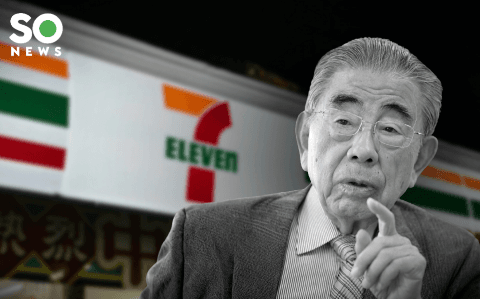
Toshifumi Suzuki, widely regarded as the father of Japan’s convenience store industry, has passed away at the age of 93. According to Seven & i Holdings, Suzuki died of heart failure on May 18 at his home in Tokyo, where he had continued serving as an honorary adviser.
Suzuki is remembered as the visionary leader who transformed 7-Eleven from a simple convenience store concept into one of the world’s largest retail chains.
The Man Who Changed Japanese Retail Forever
Born in Nagano, Japan, in 1932, Toshifumi Suzuki began his professional career at a book wholesaler before joining Ito-Yokado in 1963.
In 1973, he partnered with Southland Corporation, the American operator of 7-Eleven, to bring the convenience store model to Japan.
The first 7-Eleven store in Japan opened in Tokyo in 1974 — a move that would eventually reshape the country’s retail culture.
Building Japan’s ‘Conbini’ Culture
Suzuki revolutionised retail by adapting convenience stores to Japanese consumer behaviour.
Instead of treating stores only as quick shopping points, he introduced services and products that became deeply integrated into daily life, including:
- Ready-to-eat meals
- Rice balls and sandwiches
- Drinks and snacks
- ATM services
- Bill payments
- Copy and printing services
His focus on:
- Fast stock turnover
- Data-driven inventory planning
- Consumer convenience
helped turn “conbini” stores into an essential part of Japanese urban culture.
Rescuing 7-Eleven’s American Parent Company
One of Suzuki’s most significant achievements came during the early 1990s when Southland Corp faced financial collapse.
Suzuki played a crucial role in helping rescue the American business, and over time, the Japanese operation became increasingly dominant.
In 2005, the Japanese company officially acquired full ownership of the American 7-Eleven business, marking a major shift in global retail power.
Today, 7-Eleven operates:
- More than 80,000 stores worldwide
making it one of the largest convenience store networks globally.
Leadership, Innovation and Legacy
Suzuki remained one of Japan’s most influential retail leaders for decades.
Although he stepped down as chairman in 2016 following a management dispute, his impact on:
- Retail innovation
- Consumer convenience
- Data-driven operations
continued shaping the global convenience store industry.
His leadership style was known for:
- Operational precision
- Customer-focused innovation
- Strong belief in technology and efficiency
The Bigger Picture
Toshifumi Suzuki’s journey reflects how local adaptation and consumer understanding can transform global business models.
What began as an imported American convenience store format became, under his leadership:
- A uniquely Japanese retail phenomenon
- A global convenience empire
- A benchmark for modern retail operations
His influence extended far beyond Japan and helped shape how convenience retail operates around the world today.
Conclusion
Toshifumi Suzuki’s death marks the end of an era in global retail history. From launching Japan’s first 7-Eleven store to building one of the world’s largest retail networks, his vision transformed convenience shopping into a modern lifestyle ecosystem used by millions every day.