Startup Originals Team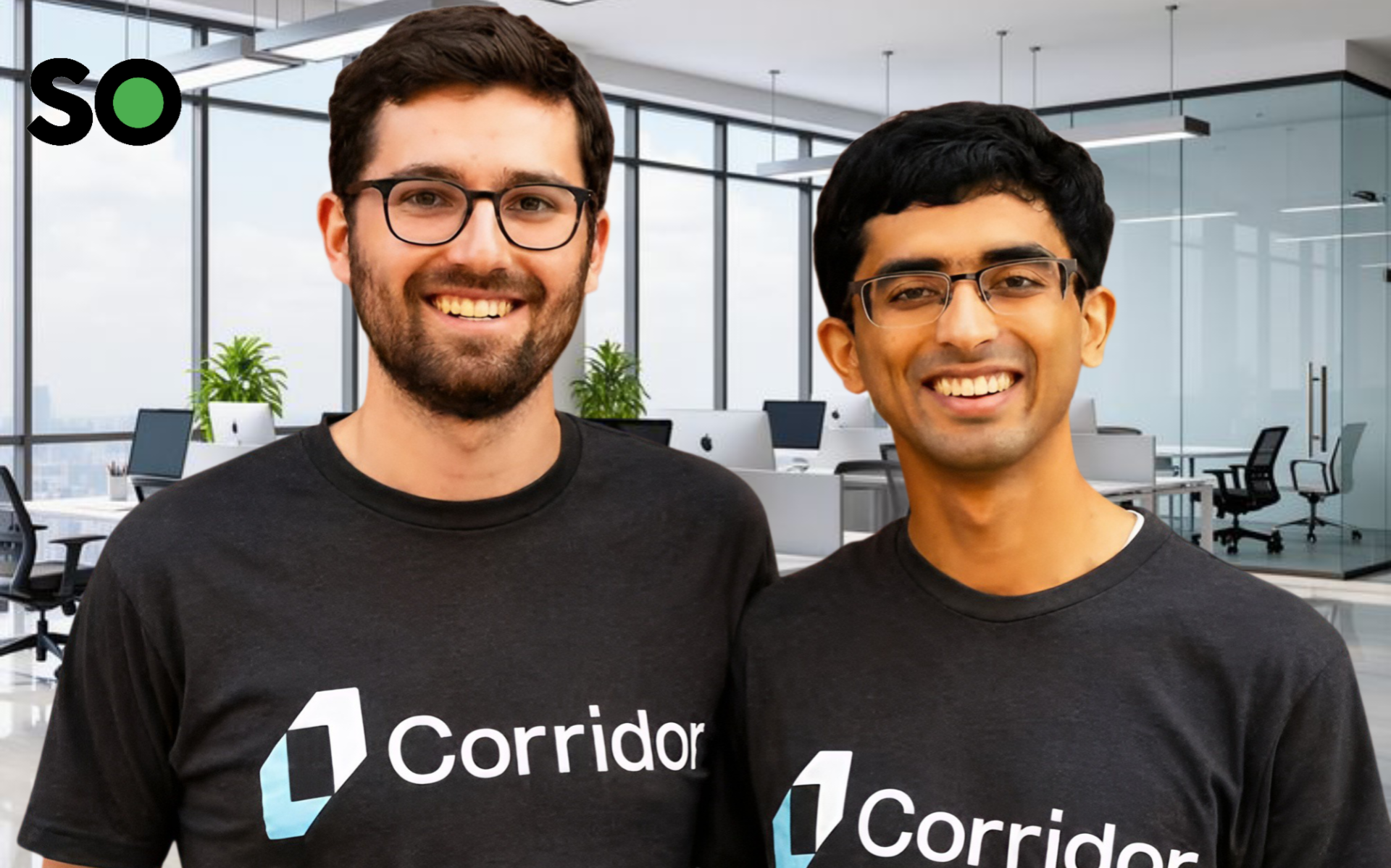
In a world where artificial intelligence is transforming how software is built, two young founders saw a growing risk that many overlooked. Corridor, an AI-native cybersecurity startup, was founded by 26-year-old friends Jack Cable and Ashwin Ramaswami to solve one of the biggest emerging challenges in tech, security in the age of AI.
Today, the startup is valued at around $200 million (₹1,890 crore), showing how quickly innovation can scale when it addresses a real and urgent problem.
From Government Work to Startup Vision
Both founders met while working at the Cybersecurity and Infrastructure Security Agency (CISA), where they were involved in protecting critical infrastructure and identifying real-world vulnerabilities.
Jack Cable had already built a reputation as an ethical hacker from a young age and later worked as a cybersecurity researcher for the U.S. government. Ashwin Ramaswami, on the other hand, brought a unique mix of technology and policy expertise, focusing on large-scale cyber risks.
Their time at CISA exposed them to how modern cyber threats evolve, and more importantly, how existing systems struggle to keep up.
The Problem: AI Is Creating Security Risks Faster Than Ever
As AI tools began writing code faster than human developers, a new problem emerged. While productivity increased, so did the number of bugs and vulnerabilities.
Traditional cybersecurity systems are largely reactive, they detect and fix issues after they occur. But with AI accelerating development, this approach is no longer enough.
The founders realised that:
- Vulnerabilities are being created at scale
- Security tools are too slow to respond
- Fixing issues later is becoming inefficient
This gap created the foundation for Corridor.
The Big Idea: AI-Native Cybersecurity
Corridor is built as an AI-first security platform designed to work in real time. Instead of waiting for vulnerabilities to appear, it aims to prevent them during the development process itself.
The platform:
- Integrates directly with coding tools
- Monitors code as it is written
- Identifies risks instantly
- Prevents vulnerabilities before they are deployed
This marks a shift from a “fix later” model to a “prevent now” approach, which is critical in an AI-driven development environment.
Rapid Growth and Investor Confidence
Corridor’s vision has attracted strong investor interest. The company raised $25 million in funding, led by Felicis, with backing from notable cybersecurity experts like Alex Stamos.
The funding will be used to:
- Expand product development
- Strengthen AI capabilities
- Scale the platform globally
This early traction highlights how investors are betting on AI-driven security solutions as the next big wave in cybersecurity.
The Bigger Picture
Corridor’s rise reflects a major shift in the cybersecurity industry. As AI becomes central to software development, security must evolve alongside it.
The startup’s mission, to make cybersecurity faster than AI itself, captures a critical need in today’s tech ecosystem. Companies can no longer afford to treat security as an afterthought.
Conclusion
From identifying vulnerabilities in government systems to building a ₹1,890 crore startup, Jack Cable and Ashwin Ramaswami have shown how spotting the right problem at the right time can lead to massive impact.
Corridor is not just building another cybersecurity tool, it is redefining how security works in an AI-powered world.