Startup Originals Team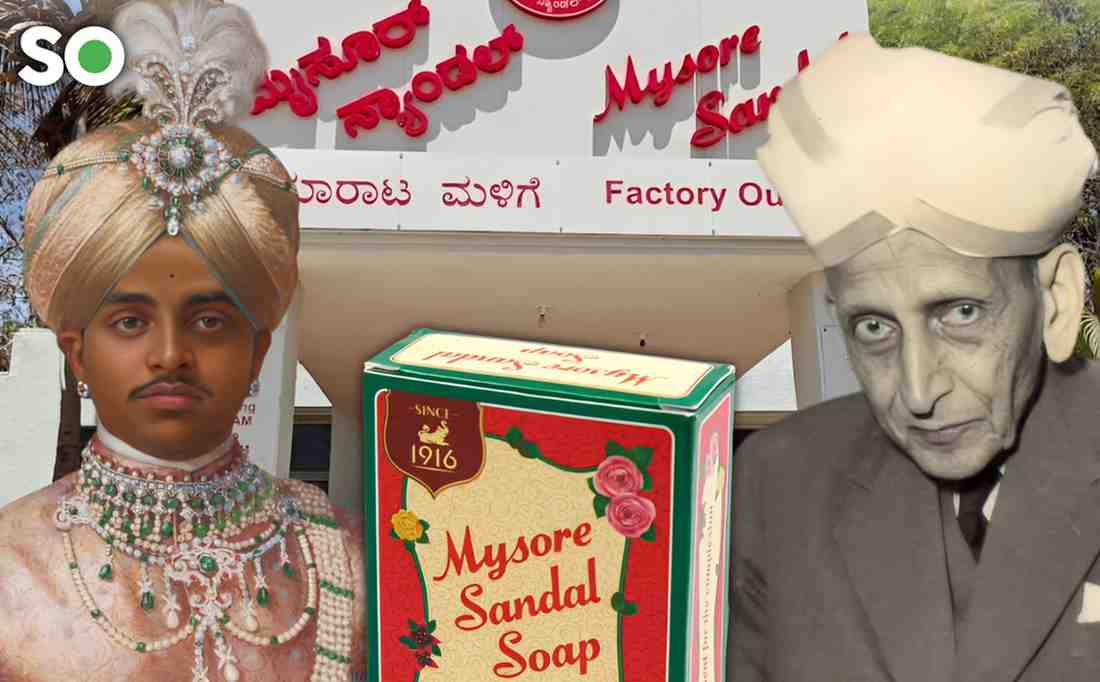
Few Indian brands carry history, heritage, and emotion as deeply as Mysore Sandal Soap. At over 108 years old, it stands as Karnataka’s pride and the world’s only soap made from 100% pure sandalwood oil, a product born not out of marketing ambition, but foresight, craftsmanship, and purpose.
When a World War Created an Unusual Problem
During World War I, global trade routes were disrupted and factories across the world began shutting down. In the princely state of Mysore, however, the challenge was the opposite—there was too much sandalwood.
Mysore was rich in high-quality sandalwood, but export restrictions and global uncertainty made it difficult to monetise the precious resource. What seemed like abundance turning into a burden soon became an opportunity for long-term thinking.
A Visionary King and an Engineer of Ideas
The issue reached Krishna Raja Wadiyar IV, the Maharaja of Mysore, a ruler known for his progressive outlook and emphasis on industrial self-reliance. Standing beside him was Sir M. Visvesvaraya, one of India’s greatest engineers and thinkers, who famously believed that problems were merely “unfinished ideas”.
Together, in 1916, they laid the foundation of the Government Soap Factory in Bengaluru, with a clear goal: add value to Mysore’s sandalwood instead of exporting it raw.
India’s First Brush With Luxury
By 1918, a truly unique product was born, Mysore Sandal Soap, crafted using pure sandalwood oil under the guidance of Sosale Garalapuri Shastry, a scholar and chemist.
Every element reflected royalty and care. The soap was designed as an oval bar, comfortable in the palm, and packaged in a box that resembled a jewellery case. The Sharabha emblem, symbolising strength and wisdom, sealed its identity. Even its fragrance felt ceremonial, elevating bathing into a ritual.
India had created its own luxury soap, rooted in tradition rather than excess.
A Brand That Refused to Age
Decades passed. Governments changed. Generations came and went. Yet Mysore Sandal Soap remained a constant, quietly present in Indian homes, especially across South India.
Recognising the need to evolve while preserving heritage, the brand made a bold move in 2006 by appointing MS Dhoni as its first brand ambassador. The message was clear: legacy survives only when it adapts to new generations.
From One Iconic Bar to a Global Portfolio
Today, the brand is produced by Karnataka Soaps and Detergents Limited (KSDL) and has expanded far beyond a single soap.
Its portfolio includes 19+ sandalwood-infused products, ranging from soaps and handwash to shower gels, detergents, and incense sticks. Mysore Sandal products are now exported to 15+ countries, including the USA, UAE, UK, and Singapore, carrying Karnataka’s heritage to global markets.
Yet, despite international reach, the brand’s emotional core remains firmly rooted in South India.
Strong Numbers, Deeper Meaning
In FY 2024–25, KSDL reported:
- ₹1,788 crore in revenue
- ₹416 crore in profit
- 45% year-on-year growth
These numbers underline the brand’s commercial strength. But its true value lies beyond balance sheets, in family cupboards, temple mornings, and festival baths. For many Indians, Mysore Sandal Soap is not a product, but a memory.
A Tradition That Lathers Through Time
Mysore Sandal Soap is more than a century-old brand. It is a living symbol of foresight, purity, and pride, proof that when tradition is protected and purpose remains clear, time becomes an ally.
Some legacies fade.
Others, like Mysore Sandal Soap, simply lather through time.