Startup Originals Team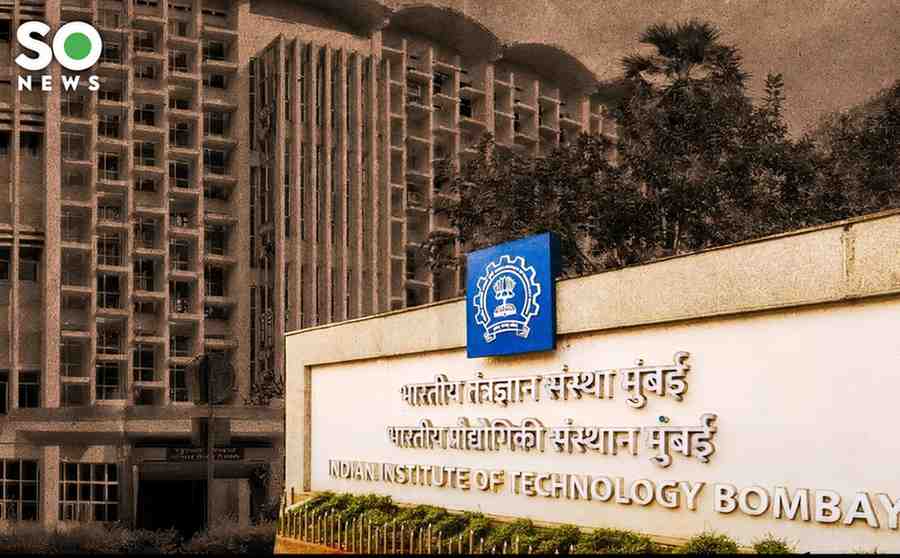
The premier engineering institute IIT Bombay – via its incubator Society for Innovation and Entrepreneurship (SINE) – has launched a ground-breaking deep-tech venture capital fund, worth ₹250 crore. Called the Y-Point Venture Capital Fund, it marks the first time an academic-linked incubator in India will directly manage a VC fund to support early-stage deep-tech startups.
What the Fund Is & What It Aims to Achieve
- The Y-Point Fund is designed to support pre-seed and seed-stage startups, particularly those born out of IIT Bombay and other premier academic and research institutions.
- It intends to back roughly 25 to 30 startups, with each investment potentially going up to ₹15 crore.
- The sectors of focus are high-impact, research-intensive domains: AI & advanced computing, advanced manufacturing, materials science, space & defence, nuclear technology, climate & clean-tech, life sciences, healthcare – essentially cutting-edge “deep tech” themes where commercialization often faces funding and incubation challenges.
Why This Fund Matters: Bridging the Deep-Tech Funding Gap
- Traditionally, deep-tech ventures face steep barriers: long gestation, high capital requirement, and uncertain returns – making many usual VCs hesitant. The Y-Point fund aims to bridge this “valley of death” for research-driven startups by providing patient capital and incubation support.
- As the fund is directly linked to an incubator (SINE), startups will also get access to infrastructure, mentorship, lab facilities and network support – not just capital. The move seeks to accelerate the journey from lab-prototype to market-ready product.
- The fund’s approval by the market regulator (registered as a Category II Alternative Investment Fund) gives it a structured, regulated framework, lending credibility and trust for potential investors and founders.
Voices & Institutional Backing
- The Chairperson of IIT Bombay’s Board of Governors, K. Radhakrishnan, said the fund will accelerate “lab-to-market” transitions by giving promising technologies the capital they need to climb the technology-readiness ladder fast.
- The Director of IIT Bombay, Shireesh Kedare, noted that SINE – which has nurtured hundreds of startups over two decades – will now enhance its role: not just incubation, but also early-stage funding, giving deep-tech ventures a better shot at commercial success.
What to Expect: Impact on India’s Deep-Tech Ecosystem
- The fund could help convert a wave of research projects in labs across IIT Bombay and other institutes into real-world deep-tech companies – across AI, clean-tech, biotech, advanced materials, defence, health, and more.
- It might inspire other academic institutions to create similar incubator-linked funds, broadening deep-tech funding infrastructure across India.
- Over next few years, India’s “lab-to-market” pipeline could strengthen significantly, reducing dependence on traditional VCs focused only on faster-return consumer or fintech startups.
Conclusion: A Pioneering Push for Deep Tech Innovation
With the launch of the ₹250 crore Y-Point Venture Capital Fund, IIT Bombay is making history, pioneering a new model where academia, incubation and venture capital converge. This could be a turning point for India’s deep-tech startup ecosystem, helping convert cutting-edge research into scalable, market-ready innovations. For founders and researchers, it may finally mean access to patient capital, mentorship, and an ecosystem built to understand – and support – deep-tech ambitions.