Startup Originals Team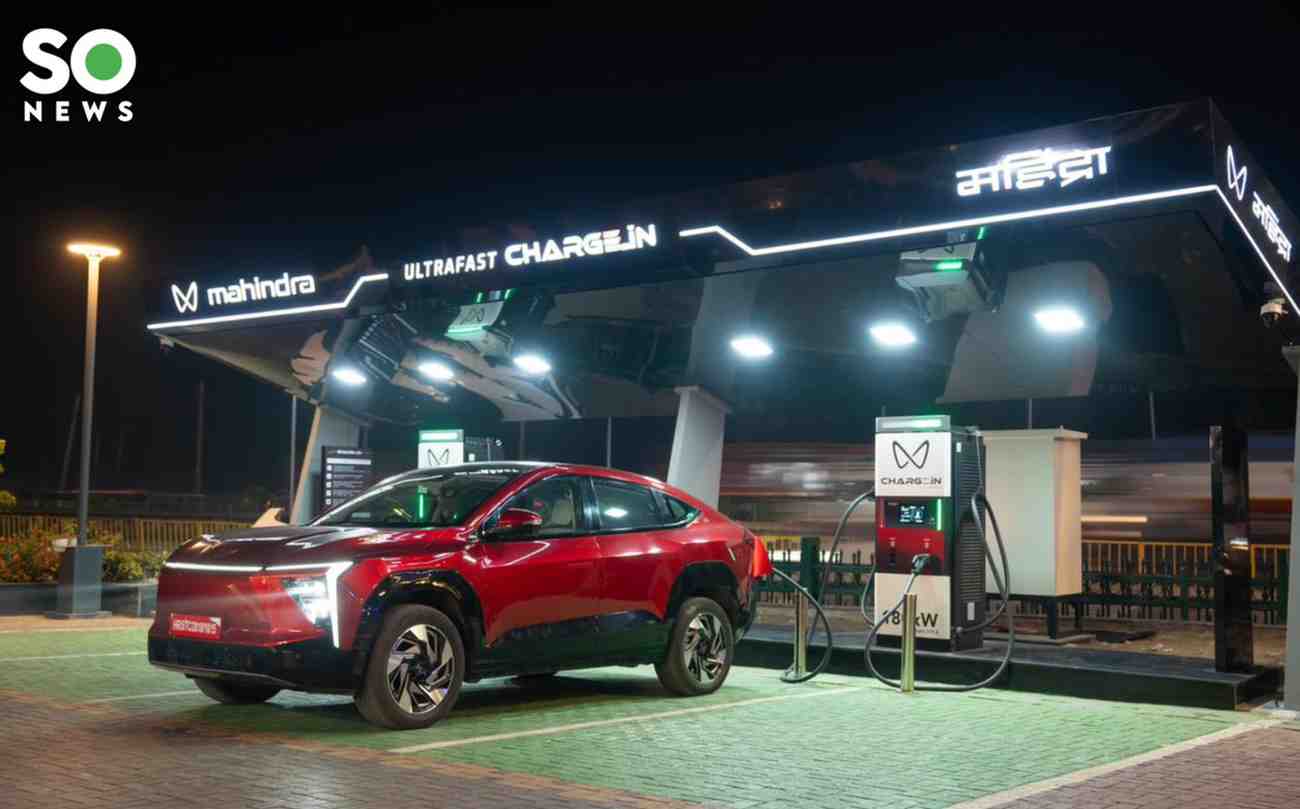
In a major boost to India’s EV infrastructure, Mahindra has inaugurated the first two ultra-fast 180 kW EV charging stations under its new Charge_IN network, a rollout that signals the company’s ambition to build one of the country’s largest public EV-charging backbones.
Where the First Stations Went Live:
The first two Charge_IN stations have been commissioned at strategic highway locations:
- Hoskote (NH 75) on the Bengaluru–Chennai corridor
- Murthal (NH 44), about 50 km north of Delhi
Each site is equipped with dual-gun 180 kW fast chargers, together capable of charging up to four EVs simultaneously.
Ambitious Rollout Plan for 2027 and Strategic Vision:
Mahindra plans to expand the network significantly:
- 250 charging stations in total by end of 2027
- A combined 1,000+ charging points across these stations, enabling wide coverage along major national highway corridors.
These will be positioned with traveler convenience in mind, co-located with roadside amenities such as restaurants and cafes so that drivers can recharge comfortably while their vehicles power up.
What This Means for EV Users and Long-Distance Travel:
The 180 kW fast chargers are especially significant because they can charge compatible EVs from 20% to 80% in about 20 minutes under ideal conditions, a key factor for long-distance electric travel.
Mahindra’s executives say the Charge_IN network is designed to be open and accessible to EV users of all brands, not just their own, which could help ease one of the major hurdles for electric adoption in India: range anxiety and charging infrastructure scarcity.
Why This Rollout Matters for India’s EV Future:
- It aligns with government push for scalable EV charging infrastructure, especially along intercity corridors and highways.
- It could make long-distance electric travel more practical, accelerating adoption of EVs beyond city commutes.
- A widespread network of high-speed chargers reduces dependency on slow or low-power charging, a major barrier in India’s EV ecosystem.
- By making charging publicly available and brand-agnostic, it could encourage more automakers and consumers to shift to electric mobility.
What to Watch Next:
- How quickly Mahindra can deploy the remaining 248 stations and whether they meet the 2027 target.
- Actual uptime, reliability, and user experience at Charge_IN stations once traffic increases.
- Adoption by non-Mahindra EV users, will the open-access promise succeed in attracting a broad user base?
- Impact on EV sales and long-distance travel frequency across India, whether improved infrastructure boosts confidence in EV ownership.