Startup Originals Team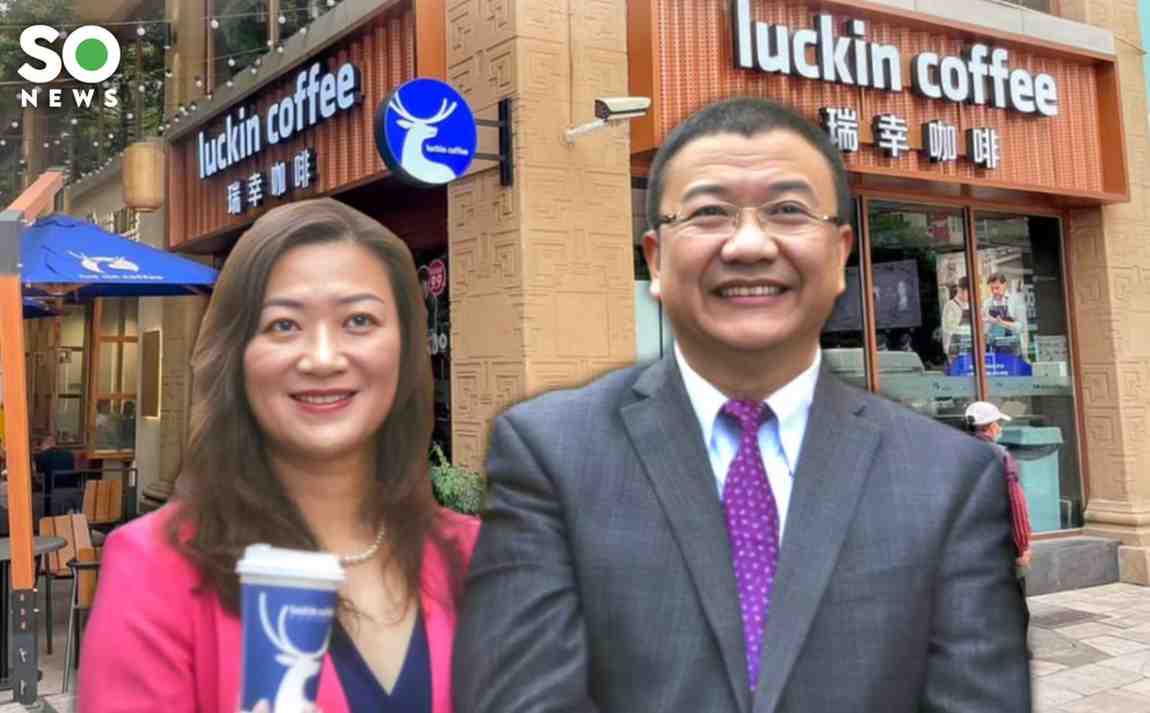
In just eight years, China’s home-grown coffee brand Luckin Coffee has exploded onto the world stage, growing to over 29,000 stores globally by 2025 and emerging as a real contender to established players like Starbucks.
Origins & Vision:
Luckin Coffee was founded in Beijing in 2017 by Lu Zhengyao and Jenny Qian Zhiya, who set out to build a new kind of coffee brand rooted in tech-enabled convenience, affordability and speed. Within just three months of inception, Luckin had opened its first stores in Beijing and Shanghai, signaling the rapid pace of its ambition.
Tech-First Model & Early Growth:
From the outset, Luckin adopted an app-only ordering model, eliminated cash payments, and set lower price points compared to competitors. This “digital-first” strategy targeted younger, urban consumers and drove kitchen optimisation, data insights and high-volume throughput.
By July 2018, Luckin had secured US$200 million in Series A funding led by Centurium Capital, Joy Capital and GIC, fuelling its rapid roll-out. By October 2018 the chain had already reached about 1,300 stores, surpassing other chains like Costa Coffee in China and becoming the country’s #2 coffee brand.
Record-Breaking Expansion & Market Leadership
In 2019 Luckin announced aggressive plans to add 2,500 new stores with the goal of overtaking Starbucks in China. It listed on NASDAQ at US$17 per share and quickly surged to US$25.96 on day-one trading, underscoring investor excitement. By late 2019, Luckin officially became China’s largest coffee chain, a feat accomplished in just two years from founding.
Crisis, Comeback & Strategic Reset:
However, Luckin’s rise hit turbulence when a fraud scandal emerged, leading to delisting and leadership reshuffle. Emerging from bankruptcy in March 2022 with a US$240 million investment from Centurium Capital, the company underwent a strategic reset, closing underperforming stores, refocusing operations, rebuilding brand trust and reaffirming its tech-driven model.
2025 Milestones & Global Scale:
By July 2025, Luckin had reached 26,206 stores globally and reported over 22,000 stores in China alone per major media reports.
In the third quarter of 2025, Luckin announced it had grown to 29,214 stores, including 18,882 self-operated stores and 10,332 partnership stores, adding 3,008 net new stores in the quarter alone.
Its revenue in that quarter jumped 50.2% year-on-year, reaching RMB 15.287 billion (~US$2.14 billion).
These milestones underscore Luckin’s return to aggressive growth and scalability.
Why Luckin Matters & What Differentiates It:
- Scale & speed: Few coffee chains have grown at this pace, 29,000+ outlets globally within eight years.
- Digital-first operations: App-based ordering, heavy data use, efficient store formats and price points tailored for high volume.
- Affordability + mass market reach: Luckin focused on younger, mobile-first consumers and aggressive expansion into tier-2/tier-3 cities.
- Recovery narrative: The comeback from scandal and debt to rapid growth is notable in global scale-ups.
Watching Ahead: Challenges & Opportunities
- Profitability & margins: Rapid store growth needs to be matched by sustainable unit economics, especially as competition intensifies.
- Global expansion: While China remains core, successful scaling outside the home market will test Luckin’s model in different consumer and regulatory contexts.
- Brand positioning: As it challenges global players, Luckin will need to maintain quality, consistency and consumer trust across thousands of locations.
- Innovation & customer loyalty: With coffee markets maturing, Luckin’s ability to innovate (menu, formats, partnerships) will determine long-term resilience.
Final Take:
The rise of Luckin Coffee from a 2017 Beijing startup to a global coffee powerhouse with more than 29,000 stores is a striking case study in aggressive scale, digital innovation and growth recovery. While still facing headwinds, global expansion, profitability and brand strength, the company has firmly established itself as a serious contender to Starbucks and a defining story of retail and technology convergence in the 21st century.