Startup Originals Team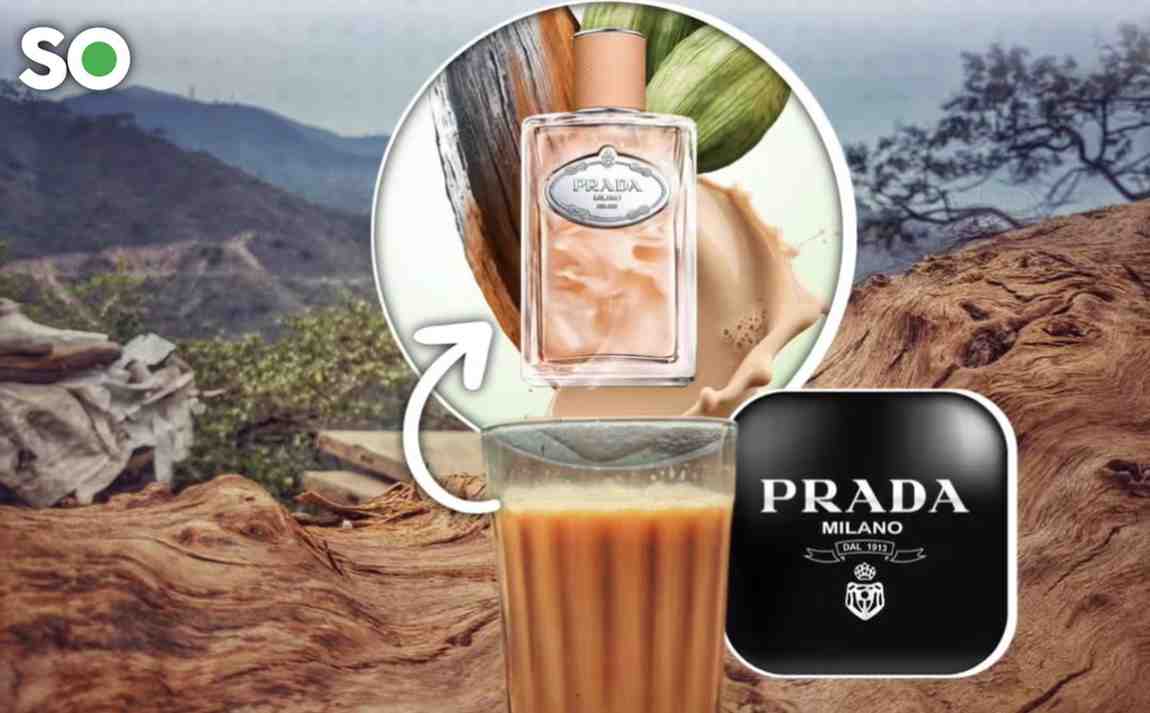
Italian luxury fashion house Prada has entered the spotlight in India with the launch of a new chai-inspired perfume, triggering widespread discussion on social media about cultural interpretation, luxury branding, and global marketing. The fragrance, priced at around ₹17,000, has drawn both curiosity and criticism for turning one of India’s most familiar daily beverages into a high-end scent.
A Chai-Inspired Addition to Prada’s Fragrance Line
Prada recently launched Infusion de Santal Chai, a unisex perfume under its established Les Infusions fragrance collection. According to the brand, the scent is designed to evoke the warm and comforting aroma of masala chai, a staple drink consumed across India every day.
The fragrance blends a chai latte accord with creamy sandalwood, citrus notes, cardamom, and soft musks. Prada describes the result as a woody and milky composition that feels both cozy and refined, aligning with the minimalist and understated aesthetic for which the brand is known.
Priced at approximately $190 (around ₹17,000), the perfume positions chai not as a casual everyday experience, but as a luxurious sensory concept interpreted through a global fashion lens.
Marketing and Visual Presentation
The perfume was introduced through a sleek promotional video showcasing Prada’s signature brown bottle, a visual hallmark of the Les Infusions range. The campaign features slow, stylised visuals of creamy tea flowing over sandalwood bark and green cardamom pods, emphasising natural ingredients and warmth.
The presentation closely aligns with Prada’s broader branding approach, which often combines simplicity, elegance, and conceptual storytelling rather than overt cultural references or narratives.
Mixed Reactions Across Indian Social Media
Soon after the launch, Infusion de Santal Chai became a talking point on Indian social media platforms. Many users expressed surprise and amusement at seeing chai, an everyday drink associated with roadside stalls and home kitchens, reimagined as a luxury perfume.
Some users appreciated the creativity behind the concept, calling it an interesting global reinterpretation of an Indian flavour profile. Others, however, questioned whether the launch bordered on cultural appropriation, particularly given the premium pricing and lack of explicit collaboration with Indian artisans or cultural experts.
Several reactions also referenced Prada’s earlier controversy involving Kolhapuri chappals, which were showcased at Milan Fashion Week but drew criticism for not clearly crediting the traditional Indian craft and its origins. This context added fuel to the debate, with critics questioning whether global luxury brands adequately acknowledge the cultural roots they draw inspiration from.
Celebration or Commercialisation?
The discussion around Prada’s chai-scented perfume reflects a broader debate on how global brands engage with local cultures. While some view such products as a celebration of Indian sensibilities on an international stage, others see them as commercialising everyday cultural elements without meaningful representation or value sharing.
Opinions remain divided. Supporters argue that fragrance, like food and fashion, naturally evolves through cross-cultural influence. Critics counter that transforming a deeply familiar cultural symbol into a luxury commodity risks detaching it from its social and cultural context.
A Launch That Achieved Its Goal
Regardless of the differing opinions, the launch of Infusion de Santal Chai has undeniably succeeded in generating attention. The perfume has sparked conversation, curiosity, and debate, outcomes that are often central to luxury branding strategies.
For Prada, the response highlights India’s growing influence as both a cultural reference point and a consumer market. For Indian audiences, the discussion underscores ongoing questions about representation, ownership, and the globalisation of local traditions in luxury spaces.